Wednesday, May 31, 2006

Orbit USA and Australia

British fantasy fans will be familiar with the name Orbit, the imprint of the Little, Brown Book Group (formerly Time Warner Book Group), that is one of the UK's major leading SF and Fantasy imprints. News was released yesterday that Orbit is launching two new SF and Fantasy imprints in Australia and the USA. Orbit USA, to be launched by the Hachette Book Group USA, will be incorporated into its Little, Brown division under Publisher Michael Pietsch, whilst Orbit Australia will form part of Hachette Livre Australia.

Orbit USA will be run by Tim Holman, currently Publishing Director of Orbit in the UK, who will be relocating to New York in July. He will also oversee the development of Orbit Australia, where an editor will be appointed to manage the local publishing. Both imprints, which are expected to launch within the next 12 - 18 months, will have a significant impact on SF and Fantasy publishing in their respective markets. Holman will also continue as Publishing Director of Orbit UK and teen fiction imprint Atom. An additional Orbit UK editor will also be appointed.

For more information on Orbit titles and their cadre of top-quality genre authors, visit the Orbit UK website. Orbit UK writers include Juliet E McKenna, Iain M Banks, Orson Scott Card, Trudi Canavan, Terry Brooks, David Gemmell, Maggie Furey, Tom Holt, Patricia McKillip, Elizabeth Moon, J V Jones, K J Parker and Tad Wiliams amongst several others.

Tuesday, May 30, 2006

Guardian Children's Fiction Prize 2006

The Guardian's children's fiction editor Julia Eccleshare has unveiled the longlist for this year's Children's Fiction Prize.

Clay by David Almond (Hodder) age 12+

Framed by Frank Cottrell Boyce (Macmillan) age 11+

Blown Away by Patrick Cave (Simon and Schuster) age 13+

A Swift Pure Cry by Siobhan Dowd (Doubleday) age 12+

Fly By Night by Frances Hardinge (Macmillan) age 11+

The Worst Witch Saves the Day by Jill Murphy (Penguin) age 8-11

A Darkling Plain by Philip Reeve (Scholastic) age 11+

The Survival Game by Tim Wynne-Jones (Usborne) age 10+

Founded in 1967, the prize has a tradition of finding new voices in children's fiction before the rest of the world is aware of them. Past winners include Philip Pullman, Jacqueline Wilson and Mark Haddon. This year's judges are Charlie Higson, Francesca Simon and last year's winner Kate Thompson.

Firefly Quote of the Week

Wash: Ah, curse your sudden but inevitable betrayal !

("Serenity", Season 1)

Monday, May 29, 2006

Spoiler Reviews

For your information and to save you trawling back through previous posts, I've added spoiler-ish reviews of Charles Butler's Calypso Dreaming and The Fetch of Mardy Watt to the Scholar's Blog Spoiler Zone. If you want to read the original reviews beforehand, Calypso Dreaming was reviewed earlier this month, and The Fetch of Mardy Watt was reviewed in August 2005. I will be posting spoiler-ish reviews of Charles Butler's Death of A Ghost, The Darkling and Timon's Tide, and Matthew Skelton's Endymion Spring later in the week.

The Eyre Affair - Jasper Fforde

Jasper Fforde's wildly funny debut novel, The Eyre Affair exists in a sort of parallel universe in which the most common form of long distance transport is the airship, in which the Crimean War has been raging for over a century, in which Wales is a Socialist Republic, and in which re-engineered Dodos are common household pets. Thursday Next, Fforde's protagonist, is a tough, gun-toting LiteraTec (Literary Detective) who works for SpecOps (the Special Operations Network), the organisation that looks after policing duties that too specialised or too unusual for the regular police force. The Literary Detectives deal with all crimes relating to books: fake sequels, the theft of original manuscripts, unlicensed performances of plays, etc. One day, Thursday is seconded to SO-5 (the Special Operations department that handles Search and Containment). They are looking for a super-villain named Acheron Hades who "can lie in thought, deed, action and appearance" and has stolen the original manuscript of Martin Chuzzlewit and "extracted" a minor character from the story. He is threatening to remove Martin Chuzzlewit himself unless his demands are met. Since Thursday was taught by Hades in the days when he was merely a villain as well as an English lecturer, she is seconded to SO-5 to identify Hades (since he doesn't resolve on film or video). When Hades' extortion plans go wrong, he decides to steal the manuscript of the nation's favourite novel, Jane Eyre and kidnaps Jane from the narrative, leaving only a partly written text. It's up to Thursday to rescue Jane and stop Hades from carrying out his diabolical schemes.

You can learn more about Thursday Next online. There is a more detailed discussion of some aspects of the book over on the Scholar's Blog Spoiler Zone.

Saturday, May 27, 2006

Holes the movie

When I was raiding the library for books as usual this morning, I spotted the Holes movie, based on Louis Sachar's excellent book, Holes, so I snagged it as I've been wanting to watch it ever since I read the book, following advice from fellow children's literature Bloggers. Fortunately, because it is two and half months since I read the book, I don't remember all the small details, so I was able to watch and enjoy the film for its own sake, instead of picking up on everything they had left out or added to the movie (although, I'm sure Stanley Yelnats is fat in the book !) For me, this is the best way to view a film of a book - with a reasonable interval between reading a book and viewing the film (not a few days after finishing the book, as I did with I Capture the Castle !)

I've mentioned before that I have difficulty watching movies based on books, particularly if I know a book well; I think it's because I'm such a word-oriented person that a film version of a book, by its very nature a visual medium, is always going to be hard pressed to match my reading experience (although seeing a movie before reading the book on which it's based worked well for me with regard to the movie and book (by Joanne Harries) of Chocolat).

So those of you who mentioned you hadn't seen the film of Holes, I can recommend it. The historical scenes are intercut nicely with the present-day scenes, and Shia LaBeouf (as Stanley) and Khleo Thomas (as Hector "Zero" Zeroni) are very good in their roles.

Friday, May 26, 2006

The Summer Book - Tove Jansson

Tove Jansson's The Summer Book is not really a children's book, nor really a novel, it is a biographical novelisation of the summer months that Tove Jansson's mother spent on an island in the Gulf of Finland with Tove's niece Sophia. This is a story about a young girl and an old woman and how they learn to live with each other, and the isolation of a tiny island home. It's also a moving exploration of how to deal with the approach of death. Grandmother and granddaughter discuss whether there are ants in Heaven, bravery and the joys of sleeping out in a tent; they draw awful pictures, build a miniature Venice in the marsh, creature animal sculptures, deal with a tremendous storm (which Sophia believes she caused by praying for something exciting to happen), and explore a newly built house that blocks their horizon. This is a gentle, charming and beguiling book that is beautifully written and translated.

The Scholar's Blog Spoiler Zone

I have generally tried to avoid spoilers in my book reviews here at Scholar's Blog, but this has led to some frustration as there have been occasions when I have wanted to talk in detail about a specific part of a book but have not wanted to spoil the story for those who dislike spoilers. Therefore, since Blogger doesn't allow users to hide things under Cuts, as LiveJournal does, I have decided to create the Scholar's Blog Spoiler Zone. Any book which I have reviewed or am going to review that I want to talk about in the kind of detail that makes spoilers inevitable will therefore have a 2-part review. The spoiler-free part will be here on Scholar's Blog, but the part with spoilers will be available, via a link on Scholar's Blog Spoiler Zone. I hope this will meet my desire to give more detailed reviews without giving spoilers to those who want to avoid them.

Thursday, May 25, 2006

Poetry Thursday

I missed Poetry Friday last week, largely due to forgetting it was Friday (having my mother's health on my mind), I haven't quite finished reading Tove Jansson's The Summer Book so I don't want to review it until tomorrow, and Spring came back again today (after weeks of nearly constant rain !),therefore I am offering you another favourite Spring poem for a Poetry Thursday. Enjoy !

Spring

Nothing is so beautiful as spring --
When weeds, in wheels, shoot long and lovely and lush;
Thrush's eggs look little low heavens, and thrush
Through the echoing timber does so rinse and wring
The ear, it strikes like lightings to hear him sing;
The glassy peartree leaves and blooms, they brush
The descending blue; that blue is all in a rush
With richness; the racing lambs too have fair their fling.

What is all this juice and all this joy?
A strain of the earth's sweet being in the beginning
In Eden garden. -- Have, get, before it cloy,
Before it cloud, Christ, lord, and sour with sinning,
Innocent mind and Mayday in girl and boy,
Most, O maid's child, thy choice and worthy the winning.


Gerard Manley Hopkins

Wednesday, May 24, 2006

Endymion Spring - Matthew Skelton

Who or what is Endymion Spring ? A power for good or for evil ? A legendary book that holds the secret to a world of knowledge ? A young boy without a voice, whose five hundred year old story is about to erupt into the 21st century ?

In fact it's all of these and more (the more is that it is a book about how dangerous books can be !)

Matthew Skelton's Endymion Spring features two timelines and two points of view. The first timeline and point of view takes place in 1452, in mediaeval Mainz (the German city where Johannes Gutenberg invented the first printing press to use movable type). It tells the story of Gutenberg's young apprentice, Endymion Spring, and the sacrifices he makes to keep a precious, dangerous dragonskin book from falling into the hands of Johann Fust (possibly the legendary Faust).

The second timeline and pint of view takes place in present-day Oxford and tell the story of 12 year old Blake Winters, who is visiting Oxford with his academic mother, and his kid sister, Duck (not her real name). Whilst Juliet Somers immerses herself in her researches in Oxford's libraries (including the world famous Bodleian), Blake feels trapped in the dusty college library until one day, whilst he is running his finger along a shelf, something pierces his finger, drawing blood. The biting book responsible is a battered old volume, with a strange clasp like a serpent's head and with real fangs. Printed on its front are two words: Endymion Spring. Blake attempts to find out more about the mysterious book and he is helped and hindered by the book itself (which gives him riddles), his sister, his mother, various Oxford scholars and librarians, and a mysterious tramp (who apparently cannot speak) with a dog.

This is a gripping fantasy mystery with an interesting collection of characters, and beautifully described landscapes (the description of the Bodleian Library is fantastic - especially the description of the Stacks below Oxford's streets (which not everyone gets to see !) Warner Brothers have bought the film rights so keep your eyes open for the film, as well as the book.

Tuesday, May 23, 2006

The Johnny Maxwell trilogy - Terry Pratchett

Terry Pratchett's Johnny Maxwell trilogy are three of the few non-Discworld books he has written. Johnny Maxwell is 12 in the first book (Only You Can Save Mankind), and a teenager in the second (Johnny and the Dead) and third (Johnny and the Bomb) books. He has a difficult home life as his parents split up over the course of the three books, and he and his mother move in with his grandfather. This may be why he starts seeing things nobody else can see; on the other hand, it's possible he sees them because they're actually there, and Johnny lacks the filters that stop most people noticing how amazing the world is. (This is a favourite theme of Pratchett's.)

Apart from his tendency to see things no one else can see, Johnny is almost unnaturally normal. His friend Kirsty often gets exasperated by his tendency to simply accept the strange things that happen to him, rather than doing something about it, but Kirsty is over-organised, scarily feminist, and very intelligent. Johnny has a strong sense of fair play, which leads him to fight for what is right, even when he has no idea what's going on. He's clearly very sensitive to history, as both Johnny and the Dead and Johnny and the Bomb demonstrate; in the former book Johnny can see the dead soldiers of the Pals Regiment that turns up to collect their newly deceased comrade in arms, Tommy Atkins, and he realises that they are heading back to France where all but Tommy died in the First World War. In the latter book Johnny has been working on a school history project about the experiences of his town (Blackbury) in the Second World War, and when he becomes the temporary owner of a shopping trolley full of black bags full of Time, he and his friends travel back in time to 1941 and the day on which 19 people were killed in Paradise Street after the German bombers, lost in the thunderstorm, drop their bombs on Blackbury instead of the railway yard over in nearby Slate.

In Only You Can Save Mankind, Johnny's innate sympathy towards others leads him to enter the eponymous computer game via his dreams in order to accept the surrender of the alien race which players of the Only You Can Save Mankind (TM) game have to overcome, and help them find the way back to their distant home in the stars.

Monday, May 22, 2006

Carnival of Children's Literature

Melissa over at Here in the Bonny Glen is hosting the fourth Carnival of Children's Literature (in spite of a chaotic household resulting from her husband breaking a toe !) I invite you to pop over there and see who's been talking about what just lately...

The next Carnival of Children's Literature will be hosted by my friend Kelly, over at Big A, little a on June 30th. If you want to submit a post, there's a form available here, and you can find out more about past and future Children's Literature Carnivals here.

* * * * * *

The lack of reviews recently is down to two things, one caused by the other. I had a bit of bad news about the health of my mother last week, which was such a shock that for several days I mostly took refuge in re-reading some books I've recently read and reviewed on my Blog. However, I'm back to reading new and new-to-me books now, so you can look forward to "normal service" being resumed shortly. Currently I'm reading Matthew Skelton's Endymion Spring, so expect a review of that in a day or two !

Sunday, May 21, 2006

The Edge of the Forest - May issue

The new issue of The Edge of the Forest, is now online. In preparation for the summer, you might want to check out books on the Sea by Anne of Book Buds and Summer reads from Little Willow of Slayground. Liz of A Chair, A Fireplace and A Tea Cozy looks at Young Adult books with the theme of Transitions and a non fiction book on Pompei, and reviews the movie version of my favourite Cornelia Funke book, The Thief Lord. Jen of Jen Robinson's Book Page reviews the new non-Artemis Fowl book, Half Moon Investigations by Eoin Colfer. This month's Blogging Writer is Mitali Perkins whom Kelly of Big A little a interviews, and there is A Day in the Life of Amy Timberlake by Kim of Kat's Eye. I was lucky enough to interview Chris Abouzeid, author of Anatopsis, and I did a longer piece on Charles Butler's excellent YA supernatural fantasy books (of which he has published five stand alone books, and which I believe deserve to better known).

There are even more great reviews and features over at The Edge of the Forest, so don't hang around here - get over there and read !!

Saturday, May 20, 2006

The Homeward Bounders - Diana Wynne Jones

Diana Wynne Jones’ The Homeward Bounders reminded me a little of Philip Pullman’s His Dark Materials trilogy, but whereas Will and Lyra can choose when, where and how to move between the multiverses, Jones’ Jamie has no such power over his movements. 12 year old Jamie is cast out of his world to wander the Bounds by Them, a mysterious, shadowy group of beings who play games with the lives of humanity, not just on Jamie’s world, but on hundreds of worlds. Jamie is told: "You are now a discard. We have no further use for you in play. You are free to walk the Bounds, but it will be against the rules for you to enter play in any world. If you succeed in returning Home, then you may enter play again in the normal manner."

He finds himself forced to survive, often in extremely hostile environments, with little help from anyone, until the day he encounters Helen. Helen has only recently been made a Homeward Bounder and she is extremely angry at just about everyone. It seems that she, too, caught a glimpse of Them who operated on her world, so instead of becoming a mighty prophet for Uquar, as was expected, she is condemned to wander the Bounds. Unlike Jamie, Helen has been taught about many of the worlds and about Homeward Bounders; she also has a rare gift: she can turn her arm into a snake, or a wooden post, or an elephant’s trunk, for she has the Hand of Uquar. She reluctantly teams up with Jamie to travel the Bounds together. Later they are joined by Joris, an enslaved demon hunter, who talks incessantly about his demon hunting master, Konstam. Both Helen and Joris are knowledge about the other worlds, but they do not have Jamie’s experience of travelling them; this does not stop them from taking the mickey out of Jamie, until they encounter a group of boys of their age who object to Joris’ and Jamie’s attempts to steal some of their clothes in an attempt to make themselves less conspicuous. The boys take Jamie, Joris and Helen down an alley, intending to strip Jamie and Joris, and get their revenge. However, Adam and his friends do not know about Homeward Bounders, and are unaware that Jamie and Joris are protected by Rule Two, which makes them impossible to kill and quite difficult to injure. Jamie gets injured by Joris’ demon knife (which would have killed him had he not been a Homeward Bounder), and Adam takes the three of them back to his house where they administer first aid. They also tell Adam about themselves, potentially making Adam a Homeward Bounder too; then Konstam arrives to “rescue” Joris and take him back to their own world. However, Joris explains what has happened to him, and the group decides, instead, to take on Them, in an attempt to stop Their meddling with humanity through games.

This is a fascinating book that keeps the reader’s attention as you wonder whether Jamie and the others will succeed in their plan, and manage to return to their respective homes. It is also interesting that Jones’ includes yet another variation on the myth of Prometheus (who is never named, but whom Jamie encounters twice). He’s turned up in several books which I’ve read during the past year, including Chris Abouzeid’s Anatopsis, Terry Deary’s The Fire Thief (second item) and Jasper Fforde’s The Big Over Easy (second item).

Wednesday, May 17, 2006

Call for Papers: Phoenix Rising

This is for all you Harry Potter fans and scholars out there.

CALL FOR PAPERS: Phoenix Rising New Orleans, LA May 17-21, 2007
A Harry Potter Symposium presented by Narrate Conferences, Inc.

Phoenix Rising, an interdisciplinary Harry Potter-themed symposium to take place May 17-21, 2007, in New Orleans, Louisiana, seeks papers, panels, interactive workshops, roundtable discussions, and other presentation formats suitable for an audience of academics, students, professionals, and fans.

The overarching conference themes focus on rebirth, cycles, and the rise of the hero at the end of the sixth book in the series, Harry Potter and the Half-Blood Prince. Additionally, special attention will be given to the arts, including examinations of Harry Potter and its convergence with music, visual arts, and film. The programming will not be limited to those themes, however, and presentations that address the Harry Potter series, related works, and phenomenon across all disciplines are encouraged as well. A non-exhaustive list of sample topics includes literary analyses of the novels; studies of the cultural phenomenon; use of the novels in schools and libraries for education; examination of related business and legal issues; scientific explanations of magic in the series; media and fan studies; craft-based workshops in writing, art, and publishing; and overviews of how the series and films fit into larger contexts.

Submission to the vetting board is by online system only. No other format or contact will be accepted. The submission system is located at Phoenix Rising Submissions, and will be open on March 31, 2006.

For those requiring an early decision in order to obtain travel funding, the deadline for submission is September 1, 2006 with a response no later than September 10, 2006. All other submissions are due by November 1, 2006 with a response date of December 1, 2006. At the time of submission, we require an abstract of 300-500 words for each separate presentation, a 50-100 word summary, and a short 50-100 word presenter biography. Those wishing to submit a proposal for a roundtable discussion may submit a brief explanation of a topic and a list of 10-15 sample discussion questions in lieu of a formal abstract.

Conference papers will be collected for publication at a later date. Presenters must be registered for the conference no later than February 1, 2007. For more information about programming, our review process, and submissions, please see the Phoenix Rising website. Questions specifically about programming may be directed to programming@thephoenixrises.org

Tuesday, May 16, 2006

The Sisters Grimm - Michael Buckley

Michael Buckley has so far written three books in his "The Sisters Grimm" series (although only two are out in the UK as yet); the first is The Sisters Grimm: The Fairy Tale Detectives. Sabrina and Daphne Grimm are orphaned sisters who are sent to live with their grandmother, Relda Grimm (whom their father had always told them was dead). Relda Grimm lives in the town of Ferryport Landing in rural New York State, a town that experiences an extraordinary number of unexplained and unusual crimes. As it turns out, the two girls and their grandmother are the descendants of the Brothers Grimm, who were not folklorists, as most people believe, but were historians and detectives of actual magical phenomena perpetrated by the Everafters, a race of magical beings known to most as the characters in Grimms' Fairy Tales. The Grimm family has a legacy to keep the Everafters in line and Sabrina and Daphne are the last of the Grimm heirs. In the first book in the series, the two girls find themselves dealing with a giant who has been rampaging through the town in its search for an Englishman named Jack, who was recently working at a Big and Tall store in the town.

In The Sisters Grimm: The Unusual Suspects Daphne and Sabrina start school, at Ferryport Landing Elementary School; Snow White is Daphne's teacher, whilst Sabrina is taught by a regular human, Mr Grumpner. The girls discover a plot involving the unusual children of several Everafter couples and an attempt to break out of Ferryport Landing and take over the world for fairy tales.

These books are quite good fun; I can easily imagine that they are very popular with children. I was reminded of the books for grown ups of Jasper Fforde, where Thursday Next is a LiteraTec who deals with crimes relating to books, and who often has conversations with literary characters (including Humpty Dumpty, the Cheshire Cat and Miss Havisham).

The second of Buckley's books ends on a cliff hanger, rather annoyingly given that The Sisters Grimm: The Problem Child is only just out in the US !

There is an interview with Michael Buckley, conducted by Kelly of Big A, little a in the April issue of The Edge of the Forest, and if you want more information on the series as a whole, visit The Sisters Grimm website.

Sunday, May 14, 2006

The Darkling - Charles Butler

The Darkling is Charles Butler’s debut novel. Since she was a child 15 year old Petra has loved to scare herself with the Darkling, a make-believe creature created from night time shadows on the wall. But what happens when the Darkling takes on a life of its own, then it reveals the tragic secret of nearby Century Hall and its elderly owner ? And why does Mr Century insist on giving Petra gifts ? No one, not even Petra, could guess at the terrifying events that will be unleashed by the Darkling, or the way they will change her life.


Charles Butler’s books have more than one key theme in common (aside from the supernatural element). All his teenage protagonists suffer from loneliness, having very few friends (usually they have just one friend on whom they can count); and all of them come from fractured homes. Only Tansy’s parents are still together (but only just); every other protagonist has lost at least one parent: Daniel’s father left home before his brother Timon’s death; Mardy’s father is dead, as is Petra’s mother; and Ossian’s artist father is not with Ossian’s mother. It appears that the loneliness of these teenagers gives the supernatural beings a foothold in their lives, allowing them to interfere. The other key theme of Butler’s books is time: whilst time is never as fluid in Butler’s books as it is in Death of a Ghost, it is nevertheless clear from The Darkling onwards, that the past and the present are far more interrelated than anyone really believes, and that it is occasionally possible for an individual to see into, or even move in, the past. In each book there is a key event that is directly linked to the events recounted in that book, an event which acts almost as a trigger for the subsequent events. Usually the event is several years in the past, but occasionally it took place only a few months before the events of the book. Thus Butler explores the idea that one individual is linked to another individual from a lifetime or more ago, and that time is not necessarily linear.

Saturday, May 13, 2006

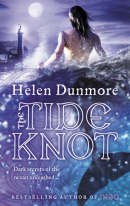
The Tide Knot - Helen Dunmore


Here's some good news for those of you who, like me, are fans of Helen Dunmore's glorious book Ingo, which I reviewed here; the sequel The Tide Knot is now out in the UK.

Here's a synopsis from Amazon:


"There's a current racing ahead, the colour of the darkest blue velvet. We plunge forward. The current is so strong that it crushes me. I'm jolting, juddering, struggling in its grip, but I can't break away. It's got me, like a cat with a bird in its claws." Sapphy, Conor and their mum have moved away from the cottage by the cove - away from the memories of their father, who disappeared two years ago - to the nearby town of St Pirans. Ever since, Sapphy has felt withdrawn and restless; she can't adjust to her new home and new life, and can't suppress the memories of her father and his mysterious disappearance. Unhappy in the world of Air, Sapphy finds herself increasingly drawn to the underwater world of Ingo and to her Mer friend, Faro. There she makes new friends: Faro's powerful, wise teacher, Saldowr, the dolphins, a whale and even sharks. But Ingo is becoming a more dangerous place. Although Conor senses this and pleads with Sapphy to stay away from Ingo, he cannot get through to her. And as Ingo grows in power both Sapphy and Conor are called to its depths to take on the might of Ingo's tides!

Minutes after I spotted this in the bookstore, I raced into the library (well, OK, I hurried !!) and asked if they had it yet. I was told it was on order and there were no reservations for it, so I promptly reserved a copy for myself. In the meantime, I will have to buy the paperback of Ingo (now it's out), so that I can read them back to back.

* * * * * *

The observant amongst you will have noticed that I've added a quote from Henry Miller to the sidebar (over there, under my Profile -->); it sums up perfectly my experience of books both here on my Blog and elsewhere across the Net and in real life, so I decided to add it to my Blog as a sort of manifesto. I hope you like it.

Friday, May 12, 2006

Poetry Friday 4

In honour of it being the birthday of the master of nonsense poetry, Edward Lear, today, I want to share with you one of my favourite poems of his:

The Jumblies

I

They went to sea in a Sieve, they did,
In a Sieve they went to sea:
In spite of all their friends could say,
On a winter's morn, on a stormy day,
In a Sieve they went to sea!
And when the Sieve turned round and round,
And every one cried, 'You'll all be drowned!'
They called aloud, 'Our Sieve ain't big,
But we don't care a button! we don't care a fig!
In a Sieve we'll go to sea!'
Far and few, far and few,
Are the lands where the Jumblies live;
Their heads are green, and their hands are blue,
And they went to sea in a Sieve.

II

They sailed away in a Sieve, they did,
In a Sieve they sailed so fast,
With only a beautiful pea-green veil
Tied with a riband by way of a sail,
To a small tobacco-pipe mast;
And every one said, who saw them go,
'O won't they be soon upset, you know!
For the sky is dark, and the voyage is long,
And happen what may, it's extremely wrong
In a Sieve to sail so fast!'
Far and few, far and few,
Are the lands where the Jumblies live;
Their heads are green, and their hands are blue,
And they went to sea in a Sieve.

III

The water it soon came in, it did,
The water it soon came in;
So to keep them dry, they wrapped their feet
In a pinky paper all folded neat,
And they fastened it down with a pin.
And they passed the night in a crockery-jar,
And each of them said, 'How wise we are!
Though the sky be dark, and the voyage be long,
Yet we never can think we were rash or wrong,
While round in our Sieve we spin!'
Far and few, far and few,
Are the lands where the Jumblies live;
Their heads are green, and their hands are blue,
And they went to sea in a Sieve.

IV

And all night long they sailed away;
And when the sun went down,
They whistled and warbled a moony song
To the echoing sound of a coppery gong,
In the shade of the mountains brown.
'O Timballo! How happy we are,
When we live in a Sieve and a crockery-jar,
And all night long in the moonlight pale,
We sail away with a pea-green sail,
In the shade of the mountains brown!'
Far and few, far and few,
Are the lands where the Jumblies live;
Their heads are green, and their hands are blue,
And they went to sea in a Sieve.

V

They sailed to the Western Sea, they did,
To a land all covered with trees,
And they bought an Owl, and a useful Cart,
And a pound of Rice, and a Cranberry Tart,
And a hive of silvery Bees.
And they bought a Pig, and some green Jack-daws,
And a lovely Monkey with lollipop paws,
And forty bottles of Ring-Bo-Ree,
And no end of Stilton Cheese.
Far and few, far and few,
Are the lands where the Jumblies live;
Their heads are green, and their hands are blue,
And they went to sea in a Sieve.

VI

And in twenty years they all came back,
In twenty years or more,
And every one said, 'How tall they've grown!
For they've been to the Lakes, and the Torrible Zone,
And the hills of the Chankly Bore!'
And they drank their health, and gave them a feast
Of dumplings made of beautiful yeast;
And every one said, 'If we only live,
We too will go to sea in a Sieve,---
To the hills of the Chankly Bore!'
Far and few, far and few,
Are the lands where the Jumblies live;
Their heads are green, and their hands are blue,
And they went to sea in a Sieve.


I will send you to read my absolute favourite of Lear's poems elsewhere because Marco Graziosi offers an illustrated version of The Owl and the Pussycat. Do take time to explore his site, it's fabulous, and do enjoy Mr Lear's nonsense - it's good for the soul !

Thursday, May 11, 2006

Maximum Ride: School's Out Forever - James Patterson

The sequel to James Patterson's Maximum Ride: The Angel Experiment is Maximum Ride: School's Out - Forever. Max and her flock fly south from New York in the hope of finding their parents, having rescued Angel from the School in California and recovered some secret documents about their origins. But after a fight at the vicious claws of the Erasers, they're forced to take Fang to a hospital for treatment, and the FBI turn up. The most senior FBI agent, Anne, takes them to her home to rest and for Fang to recover from his surgery, and then they are forced to face an even worse nightmare: going to a regular school. For Max there's no such thing as an ordinary day when her "homework" includes decoding encrypted computer printouts, figuring out when and how she's supposed to save the world, and then learning to face what may her greatest enemy: herself: a clone called Max II.

As with Maximum Ride: The Angel Experiment, the story is fast-paced and even frenetic at times, but the characters are still only roughly sketched in. These books would be perfect reading for the beach or the airport, when you want something light and easy to read. I assume there will be a third book at some stage since Max and the flock's fates are not yet resolved.