Tuesday, May 16, 2006

The Sisters Grimm - Michael Buckley

Michael Buckley has so far written three books in his "The Sisters Grimm" series (although only two are out in the UK as yet); the first is The Sisters Grimm: The Fairy Tale Detectives. Sabrina and Daphne Grimm are orphaned sisters who are sent to live with their grandmother, Relda Grimm (whom their father had always told them was dead). Relda Grimm lives in the town of Ferryport Landing in rural New York State, a town that experiences an extraordinary number of unexplained and unusual crimes. As it turns out, the two girls and their grandmother are the descendants of the Brothers Grimm, who were not folklorists, as most people believe, but were historians and detectives of actual magical phenomena perpetrated by the Everafters, a race of magical beings known to most as the characters in Grimms' Fairy Tales. The Grimm family has a legacy to keep the Everafters in line and Sabrina and Daphne are the last of the Grimm heirs. In the first book in the series, the two girls find themselves dealing with a giant who has been rampaging through the town in its search for an Englishman named Jack, who was recently working at a Big and Tall store in the town.

In The Sisters Grimm: The Unusual Suspects Daphne and Sabrina start school, at Ferryport Landing Elementary School; Snow White is Daphne's teacher, whilst Sabrina is taught by a regular human, Mr Grumpner. The girls discover a plot involving the unusual children of several Everafter couples and an attempt to break out of Ferryport Landing and take over the world for fairy tales.

These books are quite good fun; I can easily imagine that they are very popular with children. I was reminded of the books for grown ups of Jasper Fforde, where Thursday Next is a LiteraTec who deals with crimes relating to books, and who often has conversations with literary characters (including Humpty Dumpty, the Cheshire Cat and Miss Havisham).

The second of Buckley's books ends on a cliff hanger, rather annoyingly given that The Sisters Grimm: The Problem Child is only just out in the US !

There is an interview with Michael Buckley, conducted by Kelly of Big A, little a in the April issue of The Edge of the Forest, and if you want more information on the series as a whole, visit The Sisters Grimm website.

Sunday, May 14, 2006

The Darkling - Charles Butler

The Darkling is Charles Butler’s debut novel. Since she was a child 15 year old Petra has loved to scare herself with the Darkling, a make-believe creature created from night time shadows on the wall. But what happens when the Darkling takes on a life of its own, then it reveals the tragic secret of nearby Century Hall and its elderly owner ? And why does Mr Century insist on giving Petra gifts ? No one, not even Petra, could guess at the terrifying events that will be unleashed by the Darkling, or the way they will change her life.


Charles Butler’s books have more than one key theme in common (aside from the supernatural element). All his teenage protagonists suffer from loneliness, having very few friends (usually they have just one friend on whom they can count); and all of them come from fractured homes. Only Tansy’s parents are still together (but only just); every other protagonist has lost at least one parent: Daniel’s father left home before his brother Timon’s death; Mardy’s father is dead, as is Petra’s mother; and Ossian’s artist father is not with Ossian’s mother. It appears that the loneliness of these teenagers gives the supernatural beings a foothold in their lives, allowing them to interfere. The other key theme of Butler’s books is time: whilst time is never as fluid in Butler’s books as it is in Death of a Ghost, it is nevertheless clear from The Darkling onwards, that the past and the present are far more interrelated than anyone really believes, and that it is occasionally possible for an individual to see into, or even move in, the past. In each book there is a key event that is directly linked to the events recounted in that book, an event which acts almost as a trigger for the subsequent events. Usually the event is several years in the past, but occasionally it took place only a few months before the events of the book. Thus Butler explores the idea that one individual is linked to another individual from a lifetime or more ago, and that time is not necessarily linear.

Saturday, May 13, 2006

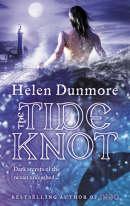
The Tide Knot - Helen Dunmore


Here's some good news for those of you who, like me, are fans of Helen Dunmore's glorious book Ingo, which I reviewed here; the sequel The Tide Knot is now out in the UK.

Here's a synopsis from Amazon:


"There's a current racing ahead, the colour of the darkest blue velvet. We plunge forward. The current is so strong that it crushes me. I'm jolting, juddering, struggling in its grip, but I can't break away. It's got me, like a cat with a bird in its claws." Sapphy, Conor and their mum have moved away from the cottage by the cove - away from the memories of their father, who disappeared two years ago - to the nearby town of St Pirans. Ever since, Sapphy has felt withdrawn and restless; she can't adjust to her new home and new life, and can't suppress the memories of her father and his mysterious disappearance. Unhappy in the world of Air, Sapphy finds herself increasingly drawn to the underwater world of Ingo and to her Mer friend, Faro. There she makes new friends: Faro's powerful, wise teacher, Saldowr, the dolphins, a whale and even sharks. But Ingo is becoming a more dangerous place. Although Conor senses this and pleads with Sapphy to stay away from Ingo, he cannot get through to her. And as Ingo grows in power both Sapphy and Conor are called to its depths to take on the might of Ingo's tides!

Minutes after I spotted this in the bookstore, I raced into the library (well, OK, I hurried !!) and asked if they had it yet. I was told it was on order and there were no reservations for it, so I promptly reserved a copy for myself. In the meantime, I will have to buy the paperback of Ingo (now it's out), so that I can read them back to back.

* * * * * *

The observant amongst you will have noticed that I've added a quote from Henry Miller to the sidebar (over there, under my Profile -->); it sums up perfectly my experience of books both here on my Blog and elsewhere across the Net and in real life, so I decided to add it to my Blog as a sort of manifesto. I hope you like it.

Friday, May 12, 2006

Poetry Friday 4

In honour of it being the birthday of the master of nonsense poetry, Edward Lear, today, I want to share with you one of my favourite poems of his:

The Jumblies

I

They went to sea in a Sieve, they did,
In a Sieve they went to sea:
In spite of all their friends could say,
On a winter's morn, on a stormy day,
In a Sieve they went to sea!
And when the Sieve turned round and round,
And every one cried, 'You'll all be drowned!'
They called aloud, 'Our Sieve ain't big,
But we don't care a button! we don't care a fig!
In a Sieve we'll go to sea!'
Far and few, far and few,
Are the lands where the Jumblies live;
Their heads are green, and their hands are blue,
And they went to sea in a Sieve.

II

They sailed away in a Sieve, they did,
In a Sieve they sailed so fast,
With only a beautiful pea-green veil
Tied with a riband by way of a sail,
To a small tobacco-pipe mast;
And every one said, who saw them go,
'O won't they be soon upset, you know!
For the sky is dark, and the voyage is long,
And happen what may, it's extremely wrong
In a Sieve to sail so fast!'
Far and few, far and few,
Are the lands where the Jumblies live;
Their heads are green, and their hands are blue,
And they went to sea in a Sieve.

III

The water it soon came in, it did,
The water it soon came in;
So to keep them dry, they wrapped their feet
In a pinky paper all folded neat,
And they fastened it down with a pin.
And they passed the night in a crockery-jar,
And each of them said, 'How wise we are!
Though the sky be dark, and the voyage be long,
Yet we never can think we were rash or wrong,
While round in our Sieve we spin!'
Far and few, far and few,
Are the lands where the Jumblies live;
Their heads are green, and their hands are blue,
And they went to sea in a Sieve.

IV

And all night long they sailed away;
And when the sun went down,
They whistled and warbled a moony song
To the echoing sound of a coppery gong,
In the shade of the mountains brown.
'O Timballo! How happy we are,
When we live in a Sieve and a crockery-jar,
And all night long in the moonlight pale,
We sail away with a pea-green sail,
In the shade of the mountains brown!'
Far and few, far and few,
Are the lands where the Jumblies live;
Their heads are green, and their hands are blue,
And they went to sea in a Sieve.

V

They sailed to the Western Sea, they did,
To a land all covered with trees,
And they bought an Owl, and a useful Cart,
And a pound of Rice, and a Cranberry Tart,
And a hive of silvery Bees.
And they bought a Pig, and some green Jack-daws,
And a lovely Monkey with lollipop paws,
And forty bottles of Ring-Bo-Ree,
And no end of Stilton Cheese.
Far and few, far and few,
Are the lands where the Jumblies live;
Their heads are green, and their hands are blue,
And they went to sea in a Sieve.

VI

And in twenty years they all came back,
In twenty years or more,
And every one said, 'How tall they've grown!
For they've been to the Lakes, and the Torrible Zone,
And the hills of the Chankly Bore!'
And they drank their health, and gave them a feast
Of dumplings made of beautiful yeast;
And every one said, 'If we only live,
We too will go to sea in a Sieve,---
To the hills of the Chankly Bore!'
Far and few, far and few,
Are the lands where the Jumblies live;
Their heads are green, and their hands are blue,
And they went to sea in a Sieve.


I will send you to read my absolute favourite of Lear's poems elsewhere because Marco Graziosi offers an illustrated version of The Owl and the Pussycat. Do take time to explore his site, it's fabulous, and do enjoy Mr Lear's nonsense - it's good for the soul !

Thursday, May 11, 2006

Maximum Ride: School's Out Forever - James Patterson

The sequel to James Patterson's Maximum Ride: The Angel Experiment is Maximum Ride: School's Out - Forever. Max and her flock fly south from New York in the hope of finding their parents, having rescued Angel from the School in California and recovered some secret documents about their origins. But after a fight at the vicious claws of the Erasers, they're forced to take Fang to a hospital for treatment, and the FBI turn up. The most senior FBI agent, Anne, takes them to her home to rest and for Fang to recover from his surgery, and then they are forced to face an even worse nightmare: going to a regular school. For Max there's no such thing as an ordinary day when her "homework" includes decoding encrypted computer printouts, figuring out when and how she's supposed to save the world, and then learning to face what may her greatest enemy: herself: a clone called Max II.

As with Maximum Ride: The Angel Experiment, the story is fast-paced and even frenetic at times, but the characters are still only roughly sketched in. These books would be perfect reading for the beach or the airport, when you want something light and easy to read. I assume there will be a third book at some stage since Max and the flock's fates are not yet resolved.

Wednesday, May 10, 2006

Maximum Ride: The Angel Experiment - James Patterson

I'm not a fan of James Patterson's fiction for adults, but I was offered the opportunity to read and review his YA novel Maximum Ride: The Angel Experiment (and its sequel Maximum Ride: School's Out - Forever). I established that they were thrillers with a Science Fiction element and agreed to give them a try. The eponymous Maximum Ride is a 14 year old girl, and she and her five adopted family members are mutants. They have 98% human DNA and 2% avian DNA: which means they have wings and can fly, they have raptor-like vision, are far stronger, have far greater stamina and far bigger appetites than normal humans. The six children (Max, Fang and Iggy - also 14, Nudge - 11, Gazzy - 8, and Angel - 6) were created as experimental recombinants in a lab called the School. Jeb, a sympathetic scientist, helped them to escape and looked after them for two years, before disappearing two years before the story starts, and since then they've been living on their own. They find themselves on the run from part-human, part-wolf predators called Erasers, who used to work at the School. The Erasers have orders to kill them so that the world will never find out that they exist, and to this end Ari (the son of Jeb and a childhood friend of Max's) tracks them down, kidnaps Angel, and transports her back to the School so that "the whitecoats" can do experiments on her again. The youngsters are forced to use their special talents to rescue her whilst attempting to learn about their pasts, and their destinies.

This book is fast-paced, with lots of short chapters to speed the reader on a ride of their own. The characterisation is limited, taking second place to the plot, but it will doubtless appeal to teenager fans of thrillers and the X-Men. I didn't find it as well written as Anthony Horowitz's "Alex Rider" books, but it's an enjoyable quick read.

Tuesday, May 09, 2006

Timon's Tide - Charles Butler

Timon's Tide is Charles Butler's second novel. It focuses on 16 year old Daniel, whose elder brother Timon, was drowned six years ago. His body was found near the Bristol docks, bound with plastic cords. Or so Daniel has always believed. Yet Daniel does not doubt that the down-and-out who accosts him in the street is Timon. Daniel already finds his complicated family life, with a step-father and a step-sister, difficult enough, without the unnerving presence of Timon, and the guilt Daniel feels over his brother's death, which he is now uncertain took place.

As with all Charles Butler's novels, Timon's Tide is chilling yet gripping; the pace is swift and the conclusion looks terrifyingly likely to be another tragedy for a family that is being haunted mercilessly.

Monday, May 08, 2006

Calypso Dreaming - Charles Butler

Charles Butler's Calypso Dreaming is set on Sweetholm, a small island out in the Bristol channel, which is best known for its seal and seabird colonies. When Geoff and Hilary Robinson are offered the opportunity to look after a house there for the summer, they see it as a good opportunity to work at patching up their disintegrating marriage. Tansy, their teenage daughter sees it as a chance to put behind her the unnerving experiments she and her best friend Kate have been making in magic. Unfortunately trouble is not so easily outrun and Sweetholm is far from the idyllic retreat it appears to be. It is, as the tagline on the dustjacket says, "one of the places where the world is frayed", a place where the dividing line between ordinary life and ancient magic has become dangerously thin. The key to the troubling events on Sweetholm is Calypso, a strange child with round lidless eyes and webbed feet hint at her ancestry. Her prophetic dreams have power, but will anybody dare to believe the truth ?

As with all of Charles Butler's books that I have read, the supernatural in this book is disturbing and unnerving; it seems all too easily possible. The book is also gripping and a page turner. Some of the things that happen to the characters, such as Calypso's uncle Dominic and Tansy's dad Geoff are frightening (more over the Scholar's Blog Spoiler Zone, but for all that, I couldn't put it down. If you have an impressionable nature, this book is best read in broad daylight !

Sunday, May 07, 2006

The Wolves of Willoughby Chase - Joan Aiken

I happened to spot Joan Aiken's The Wolves of Willoughby Chase in the library recently and since I'd never read it, yet had heard it mentioned quite often in children's literature circles, I borrowed it.

Bonnie Green lives in the lap of luxury in the manor house of Willoughby Chase in the northern English countryside. She has all the clothes, toys, and ponies that any child could want, and indulgent parents who encourage her to try things out. There is much love in the house, both from her parents and the dedicated household workers. When Bonnie's mother, Lady Sophia, becomes ill, her parents decide to take a sea voyage in the hope of restoring her health. With this in mind, Sir Willoughby asks his solicitor, Mr. Gripe, to find a governess to look after Bonnie in their absence. Mr Gripe recommends a fourth cousin once removed, a Miss Slighcarp, who arrives the night before her parents leave. To keep Bonnie company, Sir Willoughby has invited her orphaned cousin Sylvia to stay. Both of them will be taught by Miss Slighcarp, who will also run the estate. Sylvia has been living with Sir Willoughby's elderly sister, Aunt Jane, and they have barely been making ends meet; when Aunt Jane makes new clothes for Sylvia before she goes away, she uses their curtains.

Sylvia has to make a terrible journey to Willoughby Chase by train. It is very cold, and wolves attack the train; one of them breaks the window and gets into the compartment. Fortunately, a fellow passenger, Mr. Grimshaw, subdues and kills the wolf before it can do any damage. He loans Sylvia a travelling rug to help keep her warm, but later he is injured when a suitcase he is lifting down from the rack, hits him on the head. Bonnie insists that they take him to Willoughby Chase to see a doctor. Once Bonnie's parents leave, strange things start to happen; most of the servants are dismissed. Mr. Grimshaw and Miss Slighcarp are seen looking through Sir Willoughby's papers and burning some of them. When Miss Slighcarp starts wearing Lady Sophia's best gowns, Bonnie complains and is locked in a schoolroom cupboard with only bread and water to sustain her. Worse treatment soon follows, along with the news that Bonnie's parents are dead. The two girls soon find themselves fighting for survival in harsh circumstances.

This was an interesting book. How is it, though, that as often as this book has been mentioned, no one ever thought to mention it was the first in a series of THIRTEEN books ?! In case you didn't know that either and are wondering what the other twelve are, here's the full list of titles:

1. The Wolves of Willoughby Chase (1962)
2. Black Hearts in Battersea (1964)
3. Nightbirds on Nantucket (1966)
4. The Whispering Mountain (1968)
5. The Cuckoo Tree (1971)
6. Midnight Is a Place (1974)
7. The Stolen Lake (1981)
8. Dido and Pa (1986)
9. Is (1992) aka Is Underground
10. Cold Shoulder Road (1995)
11. Limbo Lodge (1999)
12. Midwinter Nightingale (2003)
13. The Witch of Clatteringshaws (2005)

I have been told that the series is only a "loose series" since the main character doesn't appear until the second book (so how does that work ?), but that was scant reassurance.

Saturday, May 06, 2006

Shakespeare's Secret - Elise Broach

I first found out about Elise Broach's Shakespeare's Secret from Camille's review at Bookmoot last September, and although it's not a fantasy novel (it's a mystery novel with a historical element), I was too intrigued not to want to read it. However, I've had to wait since September for the UK publication and then for the library to get a copy before I could get my hands on it. It finally arrived this week and I raced through it in a few hours as I was so hooked ! This is a well researched story about a missing diamond and a centuries-old puzzle: who was Willliam Shakespeare ? Was he really the man from Stratford or was that just a pseudonym for the Earl of Oxford ? The book's protagonist is a girl named Hero who always gets teased about her weird Shakespearean name every time she and her family move to a new town and she starts a new school. Not that being used to the teasing makes it any more bearable. When her next-door neighbour, a divorced older woman, tells her about the missing diamond that's believed to be hidden in her new house, Hero knows she has to find it. But why is Danny, who's the most popular boy in her sister Beatrice's year, so keen to help her ? And just how is the diamond connected to Shakespeare ? Hero is determined to find out all the answers. I highly recommend this book to everyone who likes mystery novels, history and/or Shakespeare.

Friday, May 05, 2006

Poetry Friday 3

Continuing the Spring poetry theme, I do like this poem by A E Housman.

Loveliest of Trees, the Cherry Now

Loveliest of trees, the cherry now
Is hung with bloom along the bough,
And stands about the woodland ride
Wearing white for Eastertide.

Now, of my threescore years and ten,
Twenty will not come again,
And take from seventy springs a score,
It only leaves me fifty more.

And since to look at things in bloom
Fifty springs are little room,
About the woodlands I will go
To see the cherry hung with snow.


* * * * * *

On the topic of children's books, The Guardian reports that

a clash of titans in one section of the world's leading children's book prizes was offset yesterday by an invasion of relatively ungarlanded talent in the other.

Four out of five names in the shortlist for the Carnegie medal have won the award before. But none of the eight finalists for the £5,000 Kate Greenaway illustrators medal have held it previously.

The awards - uniquely, administered and judged by librarians - are more internationally respected than any others for the age group. The Carnegie, which was founded 69 years ago and carries no prize money, has been won in the past by authors ranging from Eleanor Farjeon to Noel Streatfield and C S Lewis.

Apparently The Guardian's John Ezard doesn't know that whilst Eleanor Farjeon's name is pronounced "Farjohn", it's not actually spelt that way, but then, this is the paper that was so famous for its typos that it's still referred to by many people as The Grauniad ! However that's another matter. The full details about the two awards shortlists are in the report linked above.

Thursday, May 04, 2006

Howl's Moving Castle the movie (Spoliers)

I finally got hold of a copy of Miyazaki's Howl's Moving Castle yesterday. My initial reaction was "Wow!" because it's a beautiful animation, bright and bold, and very fantastic in looks. But I confess, I spent much of the two hours of its running time picking my jaw up off the floor because its plot is radically different from the plot of Diana Wynne Jones' book, Howl's Moving Castle. The Miyazaki film is clearly not an adaptation so much as an interpretation with Miyazaki themes including airships, cute non-human sidekicks and redemption (I've been reading up on Miyazaki !). The focus of the film is still on Sophie and her adventure whilst cursed with old age, but the main action of the plot takes place during a war, that is reminiscent of World War One and is located in a fantastical nation. Whilst the novel concentrates on Howl's womanizing and his attempts to weasel out of locating a missing prince and a missing wizard, the film depicts Howl avoiding requests to help out in the war for pacifist reasons, and deals with the consequences of his decision.

Many of the book's characters are also modified in the film. Howl's apprentice, Michael Fisher, is a teenager in the book but a young boy called Markl in the film. Sophie has just one sister in the film instead of the two in the book. Astonishingly the Witch of the Waste, is a huge heavyset woman who later becomes an old crone, instead of looking young and beautiful, and rather than terrorising the other characters as a frightening villain, she is treated as a grandmother character and even taken into Howl's home. Calcifer, who appears to be a scary fire demon in the book, becomes an adorable little flame in the film. Also, in the film Howl has the ability to turn into a large, powerful bird. Finally, whilst there is a "Wizard Suliman" in the book, in the film this character become a female sorceror, "Madame Suliman", who bullies people.

Having said all this, the film is very good; it's very watchable and quite gorgeous, but very confusing to watch if you're familiar with the book !

Tuesday, May 02, 2006

Death of a Ghost - Charles Butler

Charles Butler's new novel Death of a Ghost is a timeslip ghost story from the author of The Fetch of Mardy Watt (which I read last August)
and Calypso Dreaming (which I've yet to read). When 16 year old Ossian returns to Lychfont House from America with his artist father, he finds things are both familiar and yet oddly different. He reacquaints himself with the Frazer family, who live at Lychfont, and finds himself questioning the accuracy of certain of his childhood memories and wondering just why the place seems to hold such power over him. Of one thing he is sure, however: the ghosts are still haunting him. Whilst Ossian is puzzling over his existence, a Celtic goddess is searching for her lost love. Sulis calls in the scryer to track down her lover, wherever he may be, for their wedding must go ahead. After all, she and Ossian were made for each other! But which Ossian is which ? There's the 15th century apprentice to a goldsmith/alchemist who has a sideline in torture for the government of the day; there's the Iron Age son of a priest of Sulis; and then there's the 21st century son of an artist. But for whom of these three is Sulis searching ?

This is a supernatural thriller that grabs the attention from the first page and refuses to let go. The twist in the tale is quite astonishing and chilling. I won't say more or I'll spoil it !

Monday, May 01, 2006

ABC Meme

I cheekily stole this one from Mrs Coulter at The Republic of Heaven. Feel free to play or not...

Accent: I retain the Gloucestershire accent of my childhood and youth.

Booze: Haven't had an alcoholic drink for 6 years now (and I've never been much of a drinker anyway), but I do like Southern Comfort and Coke.

Chore I Hate: Cleaning - dusting or hoovering...

Dog or Cat: Cat - my cat is gorgeous (and a grandchild substitute to my parents!)

Essential Electronics: PC - I have a lot of "virtual" friends (and some real ones I've met via the Net) so I wouldn't be without mine.

Favourite Perfume: Can't abide it! I especially dislike it when someone smells as if they've tipped half a bottle over themselves. *Ugh* !

Gold or Silver: Silver always.

Hometown: I've got two - Oxford and Stroud (the nearest town to the village where I grew up - see accent.)

Insomnia: I am currently suffering my typical British Summer Time issue of waking up far too early. I'm an early riser anyway, but waking at 4.30 am or before is insane and unpleasant !

Job Title: Hmm. Paying job: editor (for a non-publishing firm); non paying job: Writer The latter's on my contact cards.

Kids: None !

Living arrangements: There's just me in this tiny attic !

Most admirable traits: intelligent, very observant, empathic

Number of sexual partners: None thanks. (I prefer to channel all my energies into my writing !)

Overnight hospital stays: Two too many for my liking ! Tonsillectomy when I was in my 20s; op. to fix a recurrent dislocating shoulder (also in my 20s)

Phobias: Heights - although I'm a lot better about them than I was as a child ! Also fire - again, I'm better than I was - I'm not too scared to light candles these days !

Quote: One of my current favourites is: "If a nation loses its storytellers, it loses its childhood." - Peter Handke

Religion: None. I had a period of intense religiosity from 16 - 22 but it didn't survive my student days in Oxford.

Siblings: Two - one of each, both younger.

Time I wake up: Normally 4.50 am (currently any time after 4 am !)

Unusual talent or skill: I automatically proof-read anything I read.

Vegetable I love: The humble pea ! (Also brocolli, carrots, potatoes)

Worst habit: A tendency to expect the worst.

X-rays: Too many - on the recurrent dislocating shoulder, on teeth, on knees...

Yummy foods I make: If we're talking cooking from scratch, I don't !

Zodiac sign: Scorpio - You have to watch out for the sting in the tail (allegedly !)

Sunday, April 30, 2006

"The Keys to the Kingdom" considered

If you've not read the first four books of Garth Nix's "Keys to Kingdom" series, you may want to avoid the rest of this post, but don't stop reading just yet ! In keeping with the recent spring theme of my Blog, I wanted to mention the music I've been listening to this weekend, when the radio has been off. Despite the lack of spring weather since Friday, I've been trying to keep the "Spring is here" mood going by listening to "Sheep May Safely Graze" - Bach, Symphony No. 6 (The Pastoral) - Beethoven, "The Walk to the Paradise Garden" - Delius, "Concierto de Aranjuez" - Rodrigo (known to all fans of the film Brassed Off as 'The Orange Juice Concerto', and often referred to by me as "aural sunshine"). Sadly it's having no effect on the weather, which persists in being dull, cloudy and cool (for the time of year) ! But if nothing else, I'm enjoying some lovely music !

* * * * * *

I seem to keep coming back to this series in my Blog. I've already posted a review of Sir Thursday this month, and I've already discussed the issue of Arthur Penhaligon not choosing his destiny, and his desire to refuse his destiny, but I make no apology for coming back to this, because I find it interesting and I hope others do too. The more I read of Nix's series, the more do I long to write a paper comparing and contrasting the hero, Arthur Penhaligon, with Harry Potter - and believe me, as soon as the two series are finally completed, I'll do just that ! I've just re-read the entire series-so-far because I found I'd forgotten too many of the little details of the first three books when I first read Sir Thursday three weeks ago. What I keep coming back to is Arthur's continuing resistance to his role as the Rightful Heir of the Architect. He doesn't want this responsibility and he keeps trying to return home. This is in stark contrast to Harry Potter, who couldn't wait to get away from the Dursleys. Of course, Harry was miserable whilst living full time with the Dursleys after his parents were killed, whereas Arthur is quite happy with his adopted family, having also lost his birth parents at a very young age to a very virulent flu epidemic. When Mister Monday is tricked by the first part of the Will of the Architect into choosing Arthur as the Rightful Heir, Arthur finds himself thrust into a situation where he seems to have little choice except to do what's necessary to overcome Mister Monday, and once he does, he is quite explicit that he wants to return to his own Secondary Realm until he's grown up and willing to take on the duties of being the Heir. Unfortunately, his defeat of Mister Monday attracts the attention of the other six Morrow Days (the Trustees of the Will) and he finds he has to keep going back to the House to fight them, to take their Keys from them and release further parts of the Will. But each time he does this, he is forced to use the Keys and doing so makes him a little less human and a little more of a Denizen of the House. By the end of the events of Sir Thursday, he is half human and half Denizen, and he's told that once he's 60% Denizen, he will not be able to reverse the process of becoming a Denizen (until then the changes will wear off provided Arthur refrains from using the Keys for a century). What is interesting, is that in Sir Thursday the Piper, one of the adopted sons of the Architect and the Old One, tries to claim that he is the Rightful Heir and take over Arthur's role. If the Piper did become the Rightful Heir, Arthur would be able to return home permanently. The Piper offers to take from him the four Keys which Arthur has so far acquired - but Arthur refuses to relinquish his role as the Heir. Why ? Well, the Piper refuses to agree to Arthur's terms; he refuses to promise that there will be no more interference with the Secondary Realms, including Earth, if he becomes the Heir. So here Arthur is - he's got the chance to forget about the House, the Will of the Architect and being the Rightful Heir, but he refuses the opportunity, because by now he knows that the Architect's policy of non-interference has been disregarded (including by the Architect herself) and that there can be no peace for his world if that policy continues to be disregarded. It appears that he must do what is necessary, even if that does mean he will eventually be unable to go back to his loving family. I, for one, am curious to see how the series will continue through the next three books.

Saturday, April 29, 2006

Epic Heroes and Tales

Philip Pullman, writing for The Times this week, discussed the first action heroes - the heroes of the ancient epics. Pullman notes that epics are big because they

are about big things — death, courage, honour, war, shame, vengeance. [...] large and public matters — the fate of a nation, the return of a king, the success of an army, the origin of a people. [Therefore the] principal characters are larger than human beings, and perhaps simpler too: they are heroes.

Fantasy authors are fond of epic tales: Pullman's own "His Dark Materials" trilogy is described as an epic by many reviewers. Probably the most famous modern fantay epic is Tolkien's The Lord of the Rings, which is a physically big book as well as about the big themes of war, courage, death, honour, the return of a king and the fate of several nations. The other characteristic of epics is that they are tragic; as Pullman observes The epic is not a place where anyone lives happily ever after; it obeys a mightier realism than that. And this is certainly true of both "His Dark Materials" and The Lord of The Rings; Lyra and Will save the multiverse from destruction and ensure the continuation of humanity's intelligence, but they cannot be together. And who can help wondering if either one of the will ever be truly happy, no matter how hard they work to achieve the Republic of Heaven on Earth, without the love of the other ? Similiarly, Frodo saves the Shire by ensuring the destruction of the Ring (even if he couldn't cast it into the Fire at the end), yet he cannot settle down, like Sam, and be happy with a wife and children, or even as an uncle to Sam's children. Instead he must leave his beloved Shire and seek healing in the West, before he can return to Middle-earth to die. Sam is more fortunate than Frodo, he remains in the Shire with his wife and children, yet he too must pass into the West, though he bore the Ring but a short time.

We might speculate then, whether the Harry Potter series as a whole can be described as an epic, if Harry himself does survive to live happily ever after. I'm not sure the characters can be described as larger-than-life, but the series has got epic themes: war, death, courage, vengeance (Harry's desire for revenge against Voldemort for the deaths of his parents, against Bellatrix for the death of Sirius, and against Snape for the death of Dumbledore), and honour all feature largely. But Harry is not really a larger-than-life hero: indeed, my first paper about Harry Potter suggested that Harry is more of an Everyman, a fairly ordinary boy to whom extraordinary things happen. He's talented at Quidditch (and flying in general), and he's very good at Defence Against the Dark Arts, but he's not a very dedicated student (if it hadn't been for Hermione, he wouldn't have passed his first year exams, let alone his OWLS). And whilst he's both brave and loyal, he still has a tendency towards impulsive and reckless actions that is dangerous (even if it was only directed at Malfoy and Snape in HBP). I have yet to be convinced that the Harry Potter series is epic, but maybe J K Rowling will overcome my doubts in the final book.

* * * * * *

Going back to the theme of yesterday's poetry post. I'd forgotten Coleridge's "Work Without Hope" until I was reminded of it today whilst watching Groundhog Day (a favourite film of mine) in which Phil (Murray's character) is heard quoting the third and fourth lines:

All Nature seems at work. Slugs leave their lair -
The bees are stirring - birds are on the wing -
And Winter slumbering in the open air,
Wears on his smiling face a dream of Spring!
And I the while, the sole unbusy thing,
Nor honey make, nor pair, nor build, nor sing.

Yet well I ken the banks where amaranths blow,
Have traced the fount whence streams of nectar flow.
Bloom, O ye amaranths! bloom for whom ye may,
For me ye bloom not! Glide, rich streams, away!
With lips unbrightened, wreathless brow, I stroll:
And would you learn the spells that drowse my soul?
Work without Hope draws nectar in a sieve,
And Hope without an object cannot live.

Friday, April 28, 2006

Poetry Friday 2

It's time for another Poetry Friday. This time I've gone for the Spring theme as it's actually been sunny and fairly warm in Oxford this afternoon.

But These Things Also

But these things also are Spring's --
On banks by the roadside the grass
Long-dead that is greyer now
Than all the Winter it was;

The shell of a little snail bleached
In the grass; chip of flint, and mite
Of chalk; and the small bird's dung
In splashes of purest white:

All the white things a man mistakes
For earliest violets
Who seeks through Winter's ruins
Something to pay Winter's debts,

While the North blows, and starling flocks
By chattering on and on
Keep their spirits up in the mist,
And Spring's here, Winter's not gone.


Edward Thomas

This was the first of Thomas' poems I ever read, so it has a particularly strong resonance for me.

Spring

Sound the Flute!
Now it's mute.
Birds delight
Day and Night
Nightingale
In the dale
Lark in Sky
Merrily
Merrily Merrily to welcome in the Year

Little Boy
Full of joy,
Little Girl
Sweet and small,
Cock does crow
So do you.
Merry voice
Infant noise
Merrily Merrily to welcome in the Year

Little Lamb
Here I am.
Come and lick
My white neck.
Let me pull
Your soft Wool.
Let me kiss
Your soft face
Merrily Merrily we welcome in the Year


William Blake, Songs of Innocence

Blake's Songs of Innocence and Experience were required reading for my English degree, and the contrast between the Innocent poems and the Experienced ones is quite often startling.

Finally, I have to echo the opening of T S Eliot's The Wasteland: April is the cruellest month ! We've had some quite bad weather this April in the UK, so having the sunshine today was a real blessing - and it's the start of the May Day Bank Holiday weekend (which is another blessing !)

Thursday, April 27, 2006

Emil and the Detectives - Erich Kastner

I borrowed Erich Kastner's Emil and the Detectives from the library after it was mentioned by Guus Kuijer in The Book of Everything. When an author is as emphatic about another author's book as Kuijer is, I presume that reading it is relevant to the story in which it is mentioned.

Emil is going to Berlin to visit his grandmother and his maternal aunt. He sets out on the train from the little village where he lives, but on the way he falls asleep and as he sleeps, the money which his hardworking hairdresser mother has given him to give to his grandmother is stolen. Emil considers reporting the matter to the police, but the fact that he recently vandalised a public statue (he chalked a moustache and red nose on it) puts him off. Instead he follows the man off the train into Berlin, then enlists the aid of a boy named Gustav and his gang of friends (the detectives of the title). Together they chase, capture, and unmask the thief, who tries to bluff his way out of the situation. The boys plan well, using their wits effectively to devise a very simple yet practical way to effect the thief's capture. The suspense in this story is well written and the outcome of the thief's capture is very satisfying. Even though this book was published in 1929, it has held up well and is thoroughly enjoyable.

* * * * * *

The lack of reviews this week is the result of a combination of too little time to write intelligible reviews as I've been working on my wizards writing project quite a lot.

Tuesday, April 25, 2006

The Mouse and His Child - Russell Hoban

I cannot recall, now, where I saw a reference to Russell Hoban's The Mouse and His Child a few weeks ago that prompted me to go hunting for it at the library. It's the story of two clockwork mice, a father and son, who dance together. When the key in the father's back is wound up, he dances in a circle, swinging his son up and down in the air. They begin life in a warm toy shop at Christmas, in the company of other clockwork toys. The mouse child longs for the aristocratic lady elephant to be his mother, the seal who balances a ball on her nose to be his sister, and for them all to live in the elegant dolls house on the shop counter. But they are sold to a family, in which the parents refuse to allow the children to play with the toys; instead they are only brought out at Christmas. One night, a few years after they are sold, the mouse child is overcome with longing for the elephant, the seal and the dolls house, and he begins to cry, breaking the most important rule of clockwork. The family cat is startled by the noise and knocks a vase over onto the toy mice, breaking them. They are thrown out with the rubbish, but this is just the start of their quest for a family and a home. A passing tramp finds them, repairs them to the extent that they can walk (but no longer dance), and sets them on their way with the injunction: "Be tramps". Unfortunately they then run into Manny Rat, a tyrannical crook, who uses clockwork toys as slave labour and doesn't hesitate to smash those who get out of line. The mice escape him with the intervention of a fortune-telling frog, who frightens Manny Rat with a terrible prophecy that links the fates of the mice to the rat: "A dog shall rise; a rat shall fall." What follows is a series of encounters in which the mice, particularly the child, develop a personal philosophy, that eventually leads them to achieve the mouse child's dream.

This book is quite gruesome in places - with a number of violent acts being perpetrated against the various characters. I did wonder, as I was reading it, just what child readers make of the combination of philosophy and violence.

Sunday, April 23, 2006

For Librarians and Book Lovers Everywhere

I didn't see it myself, but last night's Doctor Who episode ("Tooth and Claw" written by Russell T Davies) contained the following gem of dialogue which both my siblings were keen to share with me, and that I just had to share with those who are librarians or (like me) ardent book lovers !

The Doctor: "You want weapons? We're in a library. Books! Best weapons in the world."
[puts glasses on]
The Doctor: "This room is the greatest arsenal we could have."
Grabs a heavy book and tosses it to Rose.
The Doctor: "Arm yourself."


This is so apt - if only people would use books to arm themselves against ignorance and prejudice, instead of reacting with prejudice and ignorance to ban books !

Saturday, April 22, 2006

Book to Film Adaptations

Here are a couple of news items that have appeared in The Guardian this week.

Following on from my piece about the short story in Britain (back in January), The Guardian now reports that the short story is undergoing a revitalisation in Britain, and the success of the Asham Award, which has celebrated its 10th anniversary this week, is just one reflection of this revival. The award was launched to promote new women writers, and the winning stories will be published in an anthology alongside stories specially commissioned from established writers.

* * * * * *

Meanwhile The Guardian, in conjunction with Borders and Waterstones, has revealed a list of the top 50 film-book adaptations. A panel of experts has drawn up the list, which will be voted on by the public; the bookshops will promote the books in shops. Jane Austen is included once, for Pride and Prejudice oddly, rather than Emma Thompson's Oscar-winning adaptation of Sense and Sensibility directed by Ang Lee. And whilst I personally would agree that most of the film versions of J K Rowling's Harry Potter books are poor, I'm surprised that Peter Jackson's epic adaptations of The Lord of the Rings are missing, as are E M Forster's Howards End and A Room With a View. Children's literature is represented by Alice in Wonderland, Charlie and the Chocolate Factory, The Jungle Book, A Kestrel for a Knave (aka Kes), The Railway Children and Watership Down, although there is no indication which version of any of the 50 listed films is meant when more than one version has been made. Given the rather odd nature of The Guardian's list, I wondered which film-book adaptations you favour ? I'm not asking for 50 - a shortlist of 5 will suffice, but if anyone wants to offer a longer list, feel free. I'll compile a Scholar's Blog list collated from your suggestions at a later stage.

Thursday, April 20, 2006

The Book of Everything - Guus Kuijer

The Book of Everything by Guus Kuijer is a brief yet intensely moving book about a nine year old boy named Thomas whose strictly religious father rules their house with his fists and a wooden spoon (with which he beats Thomas), and who insists that the family live according to the Bible. But Thomas finds an escape route from his misery - he sees incredible things that no one else notices such as the tropical fish which swim in the canal, and the frogs that fill the street and try to climb through the letterbox. Thomas starts to record all his observations in a notebook, which he calls "The Book of Everything". In it he also records his dearest ambition: to be happy. But he is not sure it will ever be possible with his father around. One day, however, Thomas meets his neighbour Mrs Van Amersfoot, a widow whose husband was executed by the Nazis and who is consequently something of a rebellious spirit. She recognises a similar spirit Thomas and encourages him not to be frightened or to believe that he's all alone in his battle for happiness. She plays him Beethoven records and lends him books, including Emil and the Detectives. Thus Thomas discovers that in the fight against his father, his uniqueness, and in particular, the extraordinary power of his imagination, are the biggest weapons he possesses.

You can read the first two chapters of the story on the Arthur Levine website and I'm sure that once you do, you will want to read the rest of it too.

The Edge of the Forest - April issue

The April issue of The Edge of the Forest is up, thanks to the stirling efforts of Kelly of Big A, little a. There's an interview with Michael Buckley, the author of The Sisters Grimm series, by Kelly. Sheila Ruth, of Wands and Worlds rounds up Small Press Month. Since April is National Poetry Month, Kim Winters of Kat's Eye has A Day in the Life of children's writer and poet, Heidi Roemer. There are also book reviews galore by Susan of Chicken Spaghetti, Kelly, Jen Robinson of Jen Robinson's Book Page, Liz of A Chair, A Fireplace and a Tea Cozy, Little Willow of Slayground, Tangognat of Tangognat, and me ! Plus the usual round up of Blogs on YA books and Kids' Picks. Don't hesitate to pop over and wander around The Edge of the Forest !

Tuesday, April 18, 2006

The Assassin's Edge - Juliet E McKenna

Warning: Don't read this review if you don't want spoilers for the preceding four books in the series ! I've done my best to avoid spoiling the preceding books in the reviews so far, but if this review is to make any sense, I'm going to have to include spoilers to the previous four.

* * * * * *

The Assassin's Edge is the fifth and final book in Juliet E McKenna's series "The Tales of Einarinn".

After Livak has collected her fee from Archmage Planir for bringing a practitioner of Artifice back from the Mountains in The Gambler's Fortune, she meets up with Ryshad in Toremal. He has earned himself a princely sum after saving Messire D'Olbriot's life in an attack carried out against the D'Olbriot Name in The Warrior's Bond. He has also been released from his oath to Messire, as the latter has realised that Ryshad cannot continue to divide his loyalties between his oath to D'Olbriot and his friendship with Temar D'Alsennin. Livak suggests that the two of them move to the recovered colony of Kel Ar'Ayen so they can both be with their friends (Livak's friend Halice having remained there after the events at the end of The Swordsman's Oath). Livak and Ryshad are settling down to life in Kel Ar'Ayen, although Livak is feeling a little bored, there being few gambling prospects on this side of the ocean. Her boredom is quickly banished, however, when it becomes clear that the expected ships from Toremal that are bringing much needed goods and more potential colonists, have been hijacked by pirates. To make a bad situation even worse, the pirates are being led by three Elietimm enchanters. Still smarting from the loss of his son, Eresken, (in The Gambler's Fortune), Ilkehan is determined to regain control of Kel Ar'Ayen's riches, so that his people can move there from the barren rocky islands on which they live. Livak reluctantly volunteers to go up against Ilkehan again, accompanied by Ryshad and Shiv, and Sorgrad and 'Gren, the brothers who assisted her in her quest for Artifice in the Great Forest and the Mountains. They travel to the island of one of Olret, one of Ilkehan's rivals in order to gain his assistance in travelling to Ilkehan's home, with the promise that they will put an end to Ilkehan's raiding and revenge the maiming of Olret's son.

Whilst Livak and the others are away in the Ice Islands, trying to defeat Ilkehan, Halice and Temar lead the Kel Ar'Ayen colonists against the pirates by way of keeping Ilkehan's attention from his own domain. Despite having elemental mages, their own practitioner of Artifice, and a number of mercenaries to do battle with the pirates, Temar and Halice don't have things all their own way and one mage is badly injured and another is killed in the ensuing fight.

This book is an exciting and fitting finish to the "Tales of Einarinn" series; and my favourite book of the five.

Monday, April 17, 2006

The Warrior's Bond - Juliet E McKenna

Juliet E McKenna's The Warrior's Bond is the fourth of the "Tales of Einarinn" and switches the PoV back to Ryshad, with its events taking place about half way through the time period covered by the events in The Gambler's Fortune. Whilst Livak is facing a dangerous summer away in the West of Einarinn, Ryshad is spending most of his summer in Toremal as a newly Chosen Man to Messire D'Olbriot. Whereas he had spent much of his time travelling on his Patron's business as a Sworn Man, now Ryshad is meant to be dancing attendance on Messire and the rest of the D'Olbriot family, particularly his nephew Camarl. However, Ryshad's ingrained independence, plus the loyalty he feels to Temar D'Alsennin (newly arrived from the colony of Kel Ar'Ayen to meet the Princes and the Emperor of Tormalin to establish trading agreements with the Princes), is making his role harder than he had anticipated. He agreed to become a Chosen Man when D'Olbriot offered him this advancement following the events of The Swordsman's Oath, rather than handing back his oath fee to become a free agent, as he had considered doing. Ryshad knows he needs to make himself indispensable to Messire if he is to gain sufficient advancement to give himself and Livak a future together, but the machinations of younger men from those Houses who are opposed to D'Olbriot and the Emperor Tadriol are increasingly threatening both D'Olbriot and D'Alsennin; soon Ryshad will find himself forced to make a choice between his Patron and his friend because he cannot continue with such divided loyalties.

Sunday, April 16, 2006

The Gambler's Fortune - Juliet E McKenna

Juliet E McKenna's The Gambler's Fortune is the third novel in the "Tales of Einarinn" series and switches the PoV back to Livak. She and Ryshad cooked up a plot whilst staying at Ryshad's home for the Winter Solstice following the events of The Swordsman's Oath; she's looking for a way of raising sufficient coin that she can give up being a gambler and be with Ryshad, since he's too honourable a man to agree to live off her gambling winnings (or the proceeds of her occasional thefts), and she's not prepared to wait 10 or 15 years for Ryshad to earn a Stewardship somewhere on Messire D'Olbriot's estates. Therefore, whilst Ryshad is making himself useful to Messire, Livak is travelling with Usara, a mage with mastery over the earth, and two friends of hers, the brothers Sorgrad and Sorgren. They are mostly mercenaries but having stolen a pay chest from one of the militias fighting in the endless Lescari civil wars, they've opted to head further west, away from suspicion. Livak has an old song book borrowed from Messire's library which she is hoping to get translated. It contains songs by the three original races of Einarinn: the Forest Folk (of which Livak is a "half-blood", since her father was a Forest Minstrel), the Mountain Men (of which Sorgrad and 'Gren (as he's usually known) are full blood members, and the now extinct Plains People. The four of them travel to the Great Forest and to the Mountains in search of translations for the songs which Livak is convinced contain instances of Artifice, the mental magic which the Elietimm (whom she encountered in The Thief's Gamble) use to devastating effect and which is hard to counter with the elemental magic wielded by Usara (and Shiv). Since the Elietimm are invading the east coast to devastating effect, Livak is hoping to find forgotten Artifice with which to counter their attacks - and she hopes to get paid handsomely for it - by both Messire and Planir the Archmage if at all possible. Unfortunately the trip isn't quite the pleasure jaunt she'd hoped as someone is stirring up the Mountain Men against both the Forest Folk and the "outdwellers" (as the Folk call those who live in the rest of Einarinn) whose pasturelands are beginning to encroach on Mountain Man territory. It looks like being a bloodier summer than Livak had been hoping for, and no safer than if she had remained in the East with Ryshad...

* * * * * *

My apologies for the lack of a review yesterday - I was poleaxed by a migraine (too little sleep, too much stress)...

Friday, April 14, 2006

The Swordsman's Oath - Juliet E McKenna

The second of the "Tales of Einarinn", The Swordsman's Oath, picks up some two and a half months after the events of The Thief's Gamble. This second book moves its point of view from Livak to Ryshad, the eponymous swordsman, whom Livak had met in the course of her "quest" the previous year. Ryshad has been commanded by his patron, Messire D'Olbriot, to assist Shiv, the mage whom he met the year before, in the schemes of the Archmage Planir. The Council of Wizards and at least some of the lords of Tormalin (known as Princes, but they are not royal since Tormalin is ruled by an Emperor), have decided to co-operate in an attempt to work against whatever the Elietimm have got planned now that winter is past and good sailing weather is enabling them to cross back to the mainland again. Through the manoeuvering of at least one Elietimm enchanter, Ryshad finds himself separated from Livak, Shiv and the others of their party, and taken to the fabled Aldabreshin Archipelago, where the cruelty of the Warlords is known to prevail. Worse still, Ryshad finds himself apparently reliving the life of a long dead Tormalin nobleman via his dreams - and he finds himself facing Elietimm enchantments with his life at stake, since anyone found using or suborning magic in the Archipelago is punished most severely. In the meantime, Livak and the others are trying to establish just what is causing the mysterious dreams from which Ryshad is suffering - and when they do, the past collides dramatically with the present.

Thursday, April 13, 2006

The Thief's Gamble - Juliet E McKenna

Juliet E McKenna's The Thief's Gamble is her debut novel and the first in a series of five novels collectively called "The Tales of Einarinn". Livak is a full-time gambler and part-time thief who makes a living travelling the length and breadth of her native Ensaimin and getting into games of runes with strangers and fleecing them. She usually works with her partner in crime Halice, a trained swordswoman who was a mercenary for many years. The tale opens with Livak waiting in some frustration for Halice at a pre-arranged meeting point so that they can travel together to Col for the Autumn Fair. Running short on funds, Livak is delighted to learn of an opportunity to raise some ready cash and get personal revenge on a local lord. Unfortunately the "merchants" to whom she takes her stolen goods include a water mage and an agent of the Archmage of Hadrumal, and they had already tried to buy the tankard Livak has stolen, so they know it's not hers to sell. They enlist her in their "quest" to find more antiquities like the one she stole as payment for not turning her over to the local Watch. Livak is reluctant, believing mages to be ruthless to mundane folk like herself, but she realises she has no other choice. To make matters worse, Livak and her party get caught up with a group of blond-haired foreigners who are also seeking antiquities, and the blond men will do anything to get what they want, including murder and torture. It's not long before Livak and the others find themselves in a life and death situation battling the magic of the foreigners.

McKenna's project in creating the "Tales of Einarinn" was to create fantasy characters

who had lives of their own, whose personal concerns were going to be at least as important to them as whatever epoch-shattering events they might be caught up in.
And
a fantasy world where politics and religion and sex are part of everyday life, rather than cosmos-shaping forces ? What about a fantasy world with change and progression, where there are developments in science and technology, philosophy and literature, quite independently of whatever it is that has wizards and princes running round in circles ?
In this she has succeeded - Livak and the people with whom she is involved are fully rounded, well realised characters, with whom I can imagine sitting down for a meal and a conversation somewhere. If "High Fantasy" doesn't appeal to you, try the more realistic fnatasy of "The Tales of Einarinn" instead.

Wednesday, April 12, 2006

Winnie the Pooh gets a Hollywood Star

The BBC reports that A A Milne's Winnie the Pooh is the first ever fictional character to earn a star on the famous Hollywood Walk of Fame. Fans lined up to watch Winnie the Pooh, who celebrates his 80th birthday this year, unveil the honour. He is among around a dozen animated stars, including Mickey Mouse, Donald Duck and Snow White, to be awarded a star on the famed pavement.

The bear first appeared in the London Evening News on Christmas Eve 1925 in a story called "The Wrong Sort of Bees". He was famously illustrated by E H Shepard, who apparently spent the last years of his life hating the character as it led to the majority of his work being completely overshadowed even during his lifetime. Winnie the Pooh's many adventures with his friends Piglet, Eeyore and Tigger have since been translated into more than 40 languages.

Monday, April 10, 2006

Sir Thursday - Garth Nix

Regular readers will know that I'm a big fan of both Garth Nix's The Old Kingdom series, and "The Keys to the Kingdom" series (Mister Monday, Grim Tuesday, Drowned Wednesday). The fourth book, Sir Thursday has recently been published and I got my hands on a copy on Saturday and read most of it the same day.

The story takes up where Drowned Wednesday left off. Dame Primus is now made up of the first three parts of the Will of the Architect, and Arthur and his school friend Leaf are intending to go back to their world in the Secondary Realms to find out if their families are surviving the Sleepy Plague. However, Arthur finds that he cannot return to his world as his place in it has been taken by a Spirit-eater, a creature created from the Nothing that surrounds the House, which is one of the Architect's chief creations. The Spirit-eater has the power to infect people in Arthur's world so that it can not only read their minds but also control them. Before Arthur can work out how to get back to his world, he find himself drafted into Sir Thursday's army, so Leaf volunteers to go back to their world to find the object from which the Spirit-eater was "grown" (a pocket ripped from Arthur's shirt during the events recounted in Mister Monday) so that Arthur can destroy it. Arthur, in the meantime, becomes an army recruit and finds himself facing an organised force of New Nithlings (again created from the Nothing) who threaten to break out of the Great Maze in which the Nithlings are habitually fought, to take over the whole of the Architect's realm. Both Arthur and Leaf face a race against time to achieve Arthur's objective of gaining control of the Fourth Key and releasing the fourth part of the Will from Sir Thursday's governance.

Sunday, April 09, 2006

Is Harry Potter really Lord Voldemort ?

This suggestion is not mine. I'm currently reading Christopher Wrigley's The Return of the Hero, which I mentioned back in February and which I picked up from the library yesterday.

In the opening chapter, Wrigley suggests that Harry's "guard" in the opening of The Order of the Phoenix (Ch. 23) are not protecting him "from a resurgent Voldemort, but from himself - from the possible consequences of his own anger." (p. 26) Wrigley then notes that it's "tempting to go further and surmise that he is, or rather was Lord Voldemort. Dumbledore, it is said, is a man who gives people second chances (Goblet of Fire, Chs 24, 26), and it may be that time, as in The Prisoner [of Azkaban] but more drastically, is being rerun so that Harry may redeem himself. His years with the Dursleys can be seen as his penance and Hogwarts as his place of trial." (p. 27, emphasis mine)

To me this suggestion is quite astonishing; the idea that at some point Dumbledore offered Voldemort the chance of reforming and persuaded him to become a child again via the use of a Time Turner. It would explain just why Harry looks so much like Tom Riddle (The Chamber of Secrets, Ch. 17). But whilst it's an ingenious theory, I can't see it proving true. For instance, everyone always comments on how much Harry looks like James Potter, except for having Lily's eyes (most recently Slughorn in The Half Blood Prince, Ch. 4). I suppose it might be possible for Harry to take a Polyjuice Potion that allowed him to look like James apart from his eyes (a Potion that somehow combined something of James' and something of Lily's to give Harry his mother's eyes.) But Harry would have had to take it regularly all through his childhood without anyone except (presumably) Dumbledore knowing - and whilst living in a Muggle home. Then there's the fact that Dumbledore would have needed to persuade at least James and Lily Potter to agree to the plan - and if Harry is not their child, why did they die to save him from the older Voldemort (and why did the older Voldemort attack himself, even if he didn't know who he was attacking ?). And if Voldemort didn't attack himself, how did Harry get the lightning bolt scar, and where are James and Lily Potter, if Voldemort didn't kill them ? It seems to me that such a plot would be stupendously complicated - and Voldemort has yet to show himself worthy of being offered a second chance that would involve such a plot.

Personally, I think Voldemort is Harry's "Shadow Self", to borrow a Jungian term, hence they have a few similarities (dark hair, half-blood heritage, ability to speak Parseltongue), but rather more differences, such as his capacity to love, his loyalty, kindness, generosity - in other words his essential goodness. Whilst it may not be possible for Harry to overcome Voldemort except at the cost of his own life (as Rowling has hinted), it's possible that Harry, like Ged (in A Wizard of Earthsea) will be able to "embrace" his Shadow Self, without needing to destroy it.

* * * * * *

Fans of Joss Whedon's cult TV show, Firefly, may be interested to know about the publication of the Firefly Companion.

Saturday, April 08, 2006

Geraldine McCaughrean

McCaughrean books

Geraldine McCaughrean's Stop the Train! is set in the 19th century, in the state of Oklahoma which has just been opened up to settlers. Young Cissy and her parents are joined by a disparate group of others who arrive in Florence, an as yet unestablished town. Their lives are a continual struggle to make the plots of earth and scrub where they have staked their claims into paying concerns. The fortunes of the settlers take a real downturn when they incur the wrath of the powerful railroad baron Clifford T Rimm by their refusal to sell their claims to him for his projected "Company Town". Thwarted by their communal refusal he tells his train drivers not to stop in Florence to take on water, thereby preventing the settlers from bringing in or shipping out goods.

Florence appears to be doomed before its barely established itself, but the brave and resourceful Florentines do not intend to give up without a fight, and the battle begins to stop the train, come hell or high water ! The various methods employed waver between the frankly ingenious to the totally outrageous and life-threatening (on two occasions). It seems that all is finally lost when the Florentines discover they have a traitor in their midst, and for a while Rimm's son, Nathaniel, is suspected... I won't say any more because I don't want to spoil the story, but this is a gripping and heart-warming tale (and I don't mean that in a sentimental manner - the courage shown by the majority of the settlers is inspiring). It's also based on a real life story.

* * * * * *

I've had a Geraldine McCaughrean week as I also started (but alas did not finish) reading Gold Dust and Not the End of the World (neither book seemed to hold my interest, sadly). However, I then read The Kite Rider, which I found as gripping as Stop the Train!. This is another historical tale, this time set in 13th century China, which tells the story of 12 year old Haoyou, who is offered the chance to escape his family's poverty and the pain of his father's recent death by becoming a kite rider with the Jade Circus. Haoyou is strapped to a specially built scarlet and gold kite, which he has designed himself, and sent high into the sky to soar amongst the clouds for the entertainment of awestruck circus crowds. He travels across the earning money, freedom, and unexpected fame as he skillfully performs for local villagers who believe he can bring back messages from lost loved ones whose spirits are said to haunt the upper air. Miao, the circus master, plans for Haoyou to perform before the Mongol conqueror, Kublai Khan. But the duties that bind Haoyou to the ground, particularly his duties to his widowed mother, and his grasping uncle who is now head of the Gou family, imperil his future as a kite rider.

This novel has quite a few twists and turns, and whilst the villains didn't quite get what they deserved, it does have a fairly happy ending.

Friday, April 07, 2006

Poetry Friday

Since I haven't quite finished reading the book I want to review next on my Blog, I'm going to give you a couple more of my favourite poems today.

Do Not Go Gentle

Do not go gentle into that good night,
Old age should burn and rave at close of day;
Rage, rage against the dying of the light.

Though wise men at their end know dark is right,
Because their words had forked no lightning they
Do not go gentle into that good night.

Good men, the last wave by, crying how bright
Their frail deeds might have danced in a green bay,
Rage, rage against the dying of the light.

Wild men who caught and sang the sun in flight,
And learn, too late, they grieved it on its way,
Do not go gentle into that good night.

Grave men, near death, who see with blinding sight
Blind eyes could blaze like meteors and be gay,
Rage, rage against the dying of the light.

And you, my father, there on the sad height,
Curse, bless, me now with your fierce tears, I pray.
Do not go gentle into that good night.
Rage, rage against the dying of the light.


Dylan Thomas

* * * * * *

This one is from the Second World War (rather than the First World War wherein lies my second major interest after fantasy). For me it captures Magee's joyous pleasure in flying.

High Flight

Oh, I have slipped the surly bonds of earth
And danced the skies on laughter-silvered wings;
Sunward I’ve climbed and joined the tumbling mirth
Of sun-split clouds—and done a hundred things
You have not dreamed of—wheeled and soared and swung
High in the sunlit silence. Hov’ring there,
I’ve chased the shouting wind along and flung
My eager craft through footless halls of air.
Up, up the long delirious, burning blue,
I’ve topped the wind-swept heights with easy grace,
Where never lark, or even eagle, flew;
And, while with silent, lifting mind I’ve trod
The high untrespassed sanctity of space,
Put out my hand and touched the face of God.


RCAF Flight-Lieutenant John Gillespie Magee Jr. (1922-1941).

* * * * * *

Finally, one of my favourite Sassoon poems (not a war poem) which speaks prophetically of Sassoon's death in September 1967, nearly 40 years later.

Falling Asleep

Voices moving about in the quiet house:
Thud of feet and a muffled shutting of doors:
Everyone yawning. Only the clocks are alert.

Out in the night there's autumn-smelling gloom
Crowded with whispering trees; across the park
A hollow cry of hounds like lonely bells:
And I know that the clouds are moving across the moon;
The low, red, rising moon. Now herons call
And wrangle by their pool; and hooting owls
Sail from the wood above pale stooks of oats.

Waiting for sleep, I drift from thoughts like these;
And where to-day was dream-like, build my dreams.
Music . . . there was a bright white room below,
And someone singing a song about a soldier,
One hour, two hours ago: and soon the song
Will be 'last night' : but now the beauty swings
Across my brain, ghost of remembered chords
Which still can make such a radiance in my dream
That I can watch the marching of my soldiers,
And count their faces; faces; sunlit faces.

Falling asleep . . . the herons, and the hounds . . .
September in the darkness; and the world
I've known; all fading past me into peace.

Wednesday, April 05, 2006

Horcrux Facts and Some Speculations

Of the Horcrux, wickedest of magical inventions, we shall not speak nor give direction
- from the introduction of Magick Moste Evile (Harry Potter and the Half Blood Prince, Ch. 18)


Given Voldemort's lack of a magical background and Dumbledore's stringent ban on Horcruxes, we must assume that Voldemort owed his knowledge of the existence of Horcruxes to this passing mention of them in a Hogwarts library book. J K Rowling uses the term "Horcrux" to refer to an object in which a wizard or witch has concealed a part of his/her soul. Whilst the object does not necessarily need to be inanimate, Dumbledore suggests that using a living creature as a Horcrux is risky since the living creature can move and think for itself, independently of the implanted fragment of soul. The purpose of a Horcrux is to protect the soul fragment from anything that might happen to the body of the person who has removed the soul fragment. Whilst the Horcrux is kept safe, that person will continue to exist even if his/her body is badly injured or destroyed.

Slughorn tells the young Voldemort that to create a Horcrux, the witch or wizard has to split his/her soul into fragments by committing a murder. A spell then has to be used to implant the soul fragment into the Horcrux object, but Slughorn does not know the details. (HBP, Ch. 23). We learn that Voldemort became obsessed with avoiding death at a fairly young age (perhaps as a result of his mother dying in childbirth ?) and he came up with the idea of creating not just one Horcrux, but six, leaving a seventh soul fragment in his body. Note that by the time Voldemort has the conversation about Horcruxes with Slughorn, he has already murdered his father and paternal grandparents and has his maternal grandfather's ring in his possession.

We know that Voldemort has used the following objects as Horcruxes:

1 - Diary of 16 year old Tom Riddle which he left with Lucius Malfoy, who then planted it on Ginny Weasley just prior to her first year at Hogwarts (The Chamber of Secrets, Ch. 4) Harry destroys it by stabbing it with a fang from the Basilisk (Slytherin's monster) that was hidden in the Chamber of Secrets (CoS, Ch. 16), then returns the remains of the diary to Lucius Malfoy (CoS, Ch. 18).

2 - Marvolo Gaunt's ring which Tom Riddle hid in the ruins of the Gaunts' house. This was a large ring apparently made of gold and set with a black stone which was engraved with the Peverell coat of arms. According to Marvolo Gaunt (HBP, Ch. 10), the ring has been in the Gaunt family for centuries. After Marvolo dies in Azkaban, the ring is passed to his son Morfin and is then stolen by Marvolo's grandson, Tom Riddle, on the night that he framed Morfin for the murders of Tom Riddle Sr and his parents. Tom Jr openly wore the ring for some time but he appeared to stop wearing it once he had turned it into a Horcrux. Dumbledore found Tom had used magic to conceal the ring in the ruins of the Gaunts' house. Dumbledore destroys the Horcrux in some unexplained fashion that leaves the stone cracked down the middle. Dumbledore himself wears the ring for a while.

3 - Salazar Slytherin's locket which Tom Riddle hides in a coastal cave. This heavy gold locket carries the mark of Slytherin (an ornately serpentine S) and was inherited by Merope Gaunt (later Merope Riddle), who pawned it during her pregnancy. Borgin and Burke purchase it, then sell it to a witch named Hepzibah Smith, from whom it is subsequently stolen by Tom Riddle after he murders her. (HBP, Ch. 20). The locket is removed from its hiding place in the coastal cave by the unknown R. A. B., and another locket is left in its place with a note to Voldemort. The exact location of the real locket is unknown, although many readers suspect it is the same locket found by Harry and the others when they are cleaning the headquarters of the Order of the Phoenix (12 Grimmauld Place) during the summer before Harry's fifth year (The Order of the Phoenix, Ch. 6)

4 - Helga Hufflepuff's cup is a small, magical golden cup with two finely wrought handles, engraved with a badger (the mark of Helga Hufflepuff). It is inherited by the Smith family from Hufflepuff and according to Hepzibah Smith, the cup possesses unexplored magical powers. The cup was stolen along with the Slytherin locket after he murdered Hepzibah Smith.

Potential Horcruxes include:

1 - An unknown artefact belonging to Godric Gryffindor. The only two artefacts of Godric Gryffindor that we definitely know exist are the sword Harry used in the Chamber of Secrets to kill Slytherin's basilisk (CoS, Ch. 18) and the Sorting Hat, which is revealed to have been Gryffindor's in The Goblet of Fire (Ch. 12). Both of these items are kept in the Head's office at Hogwarts. We do not know where the sword was before Harry pulled it out of the Sorting Hat in the Chamber of Secrets, so we do not know if Voldemort had access to it in the years before he attacked the Potters. However, since Albus Dumbledore had regular access to both the sword and the Hat for several years, and since he is able to detect hidden magic, it seems rather unlikely that he would not have recognised that either one was a Horcrux.

2 - An unknown artefact of Rowena Ravenclaw. It seems likely that an artefact of Ravenclaw's would bear her mark on it - either the letter R or the Ravenclaw heraldic device, which is an eagle.

3 - Nagini, the gigantic snake which Voldemort keeps at his side. Dumbledore notes that Voldemort appears to be unusually attached to Nagini, which might mean that she is not a Horcrux since Riddle hid the other Horcruxes which we know he made.

4 - Harry himself. The only point in favour of this theory is Dumbledore's belief that on the night that he murdered Harry's parents, Voldemort was one short of the six Horcruxes he intended to make, and that he would have considered the murder of Harry, in particular, important enough to be worth creating a Horcrux. I have already stated my own argument against this theory.

The other question is where are the remaining Horcruxes hidden, if they are inanimate objects ?

It seems likely, from what we know of the Horcruxes that have been found, that the likeliest hiding places are those places which were significant to Voldemort. Therefore likely hiding places would appear to be the Muggle orphanage where Riddle was born and stayed when he was not at Hogwarts; Hogwarts itself; and the Riddle House. My own thought, on my second reading of HBP, was that the mysterious Room of Requirement in which Harry hides his Advanced Potion Making book might contain one of Voldemort's Horcruxes; it's described as being full of hundreds, possibly thousands, of magical items (HBP, Ch. 24). It would give Harry at least one reason to go back to Hogwarts - although he would need to know (as Dumbledore apparently does) how to detect the aura of a Horcrux if he was to be able to spot one in there.

Monday, April 03, 2006

Ice Age: The Meltdown

If you're a regular reader of my Blog, you'll probably have noticed by now that I'm a big fan of animated movies, whether they're Stop-Motion, Claymation or purely CGI. So when my brother asked me on Thursday, after I arrived at my parents' house, if I would like to go and see Ice Age: The Meltdown (aka Ice Age 2) with him on Saturday, I didn't hesitate to accept his invitation.

In Ice Age: The Meltdown Manny the woolly mammoth, Sid the sloth, Diego the saber-toothed tiger, and the hapless prehistoric squirrel/rat known as Scrat are reunited. The Ice Age is coming to an end, and the animals are forced to move out of the frozen valley in which they've been living, and in which Sid has, somewhat surprisingly, set up a camp/playground for the children of his fellow residents.

Manny is worried because nobody has seen another mammoth for a long time; he thinks he may be the last one until he miraculously meets Ellie (voiced by Queen Latifah), the only female mammoth left in the world. Their only problems are that they can't stand each other – and Ellie believes she's a possum ! Also, Ellie comes with some excess baggage in the form of her two possum "brothers": Crash and Eddie (voiced by Seann William Scott and Josh Peck), who are a couple of cocky, loud-mouthed pranksters who love daredevil tricks.

Manny, Sid, and Diego quickly learn that the warming climate has one major drawback: a huge glacial dam which is holding back oceans of water is about to break, threatening to flood the entire valley and drown its population. The only chance of survival lies at the other end of the valley. So our three heroes, along with Ellie, Crash and Eddie, form the most unlikely family of any "Age", as they embark on a mission across an ever-changing, increasingly dangerous landscape towards their salvation.

The film also presents the continuing adventures, or misadventures, of Scrat, who has an even larger role this time; my brother swears Scrat stole the show !

Sunday, April 02, 2006

Why Harry Potter is not a Horcrux

Proof that Harry Potter is not one of Voldemort’s Horcruxes could lie in the fact that when Harry’s and Voldemort’s wands were forced into a duel in the graveyard after Cedric was killed in The Goblet of Fire (chapter 34), we see the effects of Priori Incantatem – the spell that forces one wand to show what spells another wand has carried out. This spell comes into effect, as Dumbledore explains (chapter 36) when brother wands - ie. wands that share the same core, in this case feathers from Fawkes the Phoenix - duel. As a result of Priori Incantatem we see an echo of the new silver hand that Voldemort created for Wormtail, then we see an echo of Cedric Diggory, Frank Bryce, Bertha Jorkins, and finally James and Lily Potter - all of whom Voldemort had killed before creating Wormtail’s new hand. If Voldemort had created another Horcrux after killing Harry’s parents, we should have seen an echo of the spell in between the appearance of Bertha and the appearances of Harry’s parents, but we did not. I would be inclined to argue, therefore, that my previous belief is correct - there was no opportunity for Voldemort to create a Horcrux that is bound to Harry before or after his Avada Kedavra spell rebounded from Harry thereby all but destroying Voldemort.

My thanks to my brother Scott for noticing, and sharing with me, the fact that the Priori Incantatem spell did not give us an echo of the Horcrux spell.

Saturday, April 01, 2006

Smile - Geraldine McCaughrean

Geraldine McCaughrean's Smile! is a brief yet fascinating book. Flash is a photographer whose plane crashes in the desert. All he carries with him from the crash is an instant camera with ten photos left in it. He is found by two small children who take him to their village where the indigenous people have never seen a camera, a photograph or a photographer before. Flash takes 10 pictures of life in the village from the cow the village has worked hard to buy to the local native art and some of the villages themselves, and in the process learns to re-evaluate his own fast-moving, wealthy life as he learns to see what the villagers value is not necessarily what he values. The book ends with Flash being rescued, but his rescuers suggest that his experiences might have been his fevered imagination working as he tried to recover from the plane crash in which he was quite badly burnt and injured. It's not clear to the reader whether this is true or not, but that matters less than that we learn that our priorities are not necessarily shared by others.