Saturday, June 03, 2006

Robin McKinley Short Stories

The Door in the Hedge

Robin McKinley's The Door in the Hedge collection consists of four short stories: "The Stolen Princess", "The Princess and the Frog", a retelling of The Frog Prince, "The Hunting of the Hind" and "The Twelve Dancing Princesses, a retelling of The Twelve Dancing Princesses.

"The Stolen Princess" is set in the last mortal kingdom which borders on Faerie, a place whose inhabitants live with the risk that their baby sons and late teens daughters might be stolen. Queen Alora, whose lovely twin sister Ellian was taken on their seventeenth birthday, gives birth to a daughter late in life and names her Linadel. Alora dreads her daughter's seventeenth birthday, but when the strong-willed Linadel is taken to Faerie, the "door in the hedge" is opened, and both Faerie and humankind are changed forever.

In "The Princess and the Frog", McKinley's princess is a frightened girl in a court that is being menaced by a dark sorcerer prince named Aliyander, to whom her own brother is in thrall. She finds comfort in talking to a large green frog, who seems very sympathetic to her plight and helps her to overcome Aliyander in a rather startling manner.

In "The Hunting of the Hind" a prince falls fatally sick after hunting a beautiful, yet uncanny golden hind. Fortunately, his small half-sister Korah, who has been largely ignored and neglected by everyone except her beloved big brother, rides out to the hunt, and discovers that the hind herself is under a spell. She must then find it in herself to rescue the hind in order to rescue her brother.

In "The Twelve Dancing Princesses", the hero is a soldier who has been prematurely aged by war and is "weary and sad at heart, with a sadness that had no hope in it anywhere." He has heard about the twelve princesses who dance every night until their shoes are worn out and he sets out to see if he discover the mystery. On the way to the King's city, he stops to help an old woman, hauling water from a well for her. In return she gives him a cloak that will make him invisible, and tells him not to drink the wine he will be given by one of the princesses. All he has to do is follow the princesses and bring back some evidence of where they go each night.

Elementals: Water

Elementals: Water is a collection of six short stories, three of which are by Robin McKinley and the other three are by her husband, Peter Dickinson. I have only read the three by McKinley so far: "The Sea King's Son", "Water Horse" and "A Pool in the Desert".

In "The Sea King's Son", Jenny, the only daughter of a farming family becomes engaged to a young man who turns out to be less than suitable, and when she discovers this fact, she flees from his family's farm towards home. But in her distress she forgets the prohibition on land people to use the bridge that connects the two sides of the bay, and the Sea King appears, apparently ready to drown her. She begs him to send her horse and dog home so that her parents will know what has happened to her, and he decides that he will not drown her after all. Jenny is sick for many weeks after her encounter with the Sea King, in part because he touched her in lifting her onto her horse to send her on her way. When she recovers, she goes down to the bridge across the bay, intending to apologise to and thank the Sea King. Instead, she finds his son waiting to see her and an astonishing friendship develops between them.

In "Water Horse", Tamia, the eldest daughter of an inland family, whose step father does not value her, is chosen by the Guardian of the Western Mouth to be her apprentice, to learn the water magic that protects their Island home. Tamia has never seen the sea and is quite convinced that the Guardian has made a mistake, but agrees to learn the water magic. One day, however, her mentor has a stroke and Tamia needs help, but has not yet learned how to send messages to the other Guardians around the Island's shore. She does some magic which she thinks will work, and it does, but unfortunately it also sets free a Horse of Water, which has run wild across the Island is threatening to drown the Island and everyone on it. Tamia discovers that she must be the one who attempts to set everything right again. I found myself wishing this tale was a full length novel, so engrossed did I become and so much more did I want to know about the tale's background.

McKinley's "A Pool in the Desert" disappointed me. It tries too hard to tie a tale of Damar to our world (known as the Homeland) and spoils what is an interesting idea, I feel. Another put-upon, undervalued young woman (McKinley almost seems to specialise in these !) begins dreaming of a desert place, which she slowly discovers is real. Just as she is deciding to try to visit Damar so she can meet in person the man whom she has been dreaming about, she discovers that her dreams are actually about Damar's past (set after Tor and Aerin's age in The Hero and the Crown).

* * * * * *

I added a spoiler-ish review of Charler Butler's The Darkling to the Scholar's Blog Spoiler Zone (Blogger was on the fritz last night or you would have had today's reviews yesterday !)

Thursday, June 01, 2006

Poetry Thursday 2

I'm going to do it again, and if Kelly of Big A, little a could reach across the Ocean that separates us, I don't doubt she'd be tempted to kick my shins at least, for pre-empting the poetry party two weeks in a row ! But it's John Masefield's birthday today, and I wanted to celebrate on the day. I love his poem "Sea Fever" (it's best chanted, never mind read, aloud):

Sea-Fever

I must down to the seas again, to the lonely sea and the sky,
And all I ask is a tall ship and a star to steer her by,
And the wheel's kick and the wind's song and the white sail's shaking,
And a grey mist on the sea's face, and a grey dawn breaking.

I must down to the seas again, for the call of the running tide
Is a wild call and a clear call that may not be denied;
And all I ask is a windy day with the white clouds flying,
And the flung spray and the blown spume, and the sea-gulls crying.

I must down to the seas again, to the vagrant gypsy life,
To the gull's way and the whale's way where the wind's like a whetted knife;
And all I ask is a merry yarn from a laughing fellow-rover
And quiet sleep and a sweet dream when the long trick's over.


The first time I ever read it after reading The Lord of the Rings, I thought of Legolas sitting up in Minas Tirish, enchanted by the Sea that he had only recently seen for the first time.

John Masefield was born in the town of Ledbury, surrounded by beautiful countryside in the region of Herefordshire, England, on June 1, 1878. The picturesque county in which he was born is located near the border of Wales (it borders with my home county of Gloucestershire), and was described by Masefield as his "Paradise". As a young boy, Masefield was able to roam the countryside, and delighted in watching the ships moving up and down the local canal; wandering alone through the meadows and woods; and taking an interest in and observing the beauty of the natural flora and fauna of the area. He suffered several tragedies in his life at an early age, losing both his parents by the age of 12. The responsibility for bringing up the orphaned Masefield children was taken on by an aunt and uncle with no experience of children and lacking the necessary finances to continue the expensive schooling John had been receiving. And to John's irritation, since by now he had become very fond of reading, his aunt scorned books and had his grandfather's library removed from her home. At the age of 13 John's aunt insisted that he be sent to the sea-cadet ship, the HMS Conway, for training for a life at sea. He spent several years aboard this training ship and whilst he initially had no desire to go there, he found that he could spend much of his time reading and writing, as well as receiving instruction in nautical subjects such as astronomy, navigation and geography. It was whilst he was on board the Conway that Masefield's love for story-telling grew. During his years on the ship spent in the company of his instructors, many of whom had years of experience at sea, he listened to many yarns that were verbally passed on about sea lore. He continued to read books with a passion, and at this early age felt that he was to become a writer and story teller himself. He was Poet Laureate from 1930 until his death in 1967, and is best remembered by many as the author of the classic children's novels The Midnight Folk and The Box of Delights.

A Ballad of John Silver

We were schooner-rigged and rakish, with a long and lissome hull,
And we flew the pretty colours of the crossbones and the skull;
We'd a big black Jolly Roger flapping grimly at the fore,
And we sailed the Spanish Water in the happy days of yore.

We'd a long brass gun amidships, like a well-conducted ship,
We had each a brace of pistols and a cutlass at the hip;
It's a point which tells against us, and a fact to be deplored,
But we chased the goodly merchant-men and laid their ships aboard.

Then the dead men fouled the scuppers and the wounded filled the chains,
And the paint-work all was spatter dashed with other peoples brains,
She was boarded, she was looted, she was scuttled till she sank.
And the pale survivors left us by the medium of the plank.

O! then it was (while standing by the taffrail on the poop)
We could hear the drowning folk lament the absent chicken coop;
Then, having washed the blood away, we'd little else to do
Than to dance a quiet hornpipe as the old salts taught us to.

O! the fiddle on the fo'c'sle, and the slapping naked soles,
And the genial "Down the middle, Jake, and curtsey when she rolls!"
With the silver seas around us and the pale moon overhead,
And the look-out not a-looking and his pipe-bowl glowing red.

Ah! the pig-tailed, quidding pirates and the pretty pranks we played,
All have since been put a stop to by the naughty Board of Trade;
The schooners and the merry crews are laid away to rest,
A little south the sunset in the islands of the Blest.


* * * * * *

I apologise for the shortage of book reviews so far this week. I've taken to writing them out long hand during my lunch break, but finding the energy to type them up and edit them of an evening, after 8 hours of proof-reading is not easy. I promise to make up for it at the weekend (including spoiler-ish reviews for the Scholar's Blog Spoiler Zone).

Wednesday, May 31, 2006

Orbit USA and Australia

British fantasy fans will be familiar with the name Orbit, the imprint of the Little, Brown Book Group (formerly Time Warner Book Group), that is one of the UK's major leading SF and Fantasy imprints. News was released yesterday that Orbit is launching two new SF and Fantasy imprints in Australia and the USA. Orbit USA, to be launched by the Hachette Book Group USA, will be incorporated into its Little, Brown division under Publisher Michael Pietsch, whilst Orbit Australia will form part of Hachette Livre Australia.

Orbit USA will be run by Tim Holman, currently Publishing Director of Orbit in the UK, who will be relocating to New York in July. He will also oversee the development of Orbit Australia, where an editor will be appointed to manage the local publishing. Both imprints, which are expected to launch within the next 12 - 18 months, will have a significant impact on SF and Fantasy publishing in their respective markets. Holman will also continue as Publishing Director of Orbit UK and teen fiction imprint Atom. An additional Orbit UK editor will also be appointed.

For more information on Orbit titles and their cadre of top-quality genre authors, visit the Orbit UK website. Orbit UK writers include Juliet E McKenna, Iain M Banks, Orson Scott Card, Trudi Canavan, Terry Brooks, David Gemmell, Maggie Furey, Tom Holt, Patricia McKillip, Elizabeth Moon, J V Jones, K J Parker and Tad Wiliams amongst several others.

Tuesday, May 30, 2006

Guardian Children's Fiction Prize 2006

The Guardian's children's fiction editor Julia Eccleshare has unveiled the longlist for this year's Children's Fiction Prize.

Clay by David Almond (Hodder) age 12+

Framed by Frank Cottrell Boyce (Macmillan) age 11+

Blown Away by Patrick Cave (Simon and Schuster) age 13+

A Swift Pure Cry by Siobhan Dowd (Doubleday) age 12+

Fly By Night by Frances Hardinge (Macmillan) age 11+

The Worst Witch Saves the Day by Jill Murphy (Penguin) age 8-11

A Darkling Plain by Philip Reeve (Scholastic) age 11+

The Survival Game by Tim Wynne-Jones (Usborne) age 10+

Founded in 1967, the prize has a tradition of finding new voices in children's fiction before the rest of the world is aware of them. Past winners include Philip Pullman, Jacqueline Wilson and Mark Haddon. This year's judges are Charlie Higson, Francesca Simon and last year's winner Kate Thompson.

Firefly Quote of the Week

Wash: Ah, curse your sudden but inevitable betrayal !

("Serenity", Season 1)

Monday, May 29, 2006

Spoiler Reviews

For your information and to save you trawling back through previous posts, I've added spoiler-ish reviews of Charles Butler's Calypso Dreaming and The Fetch of Mardy Watt to the Scholar's Blog Spoiler Zone. If you want to read the original reviews beforehand, Calypso Dreaming was reviewed earlier this month, and The Fetch of Mardy Watt was reviewed in August 2005. I will be posting spoiler-ish reviews of Charles Butler's Death of A Ghost, The Darkling and Timon's Tide, and Matthew Skelton's Endymion Spring later in the week.

The Eyre Affair - Jasper Fforde

Jasper Fforde's wildly funny debut novel, The Eyre Affair exists in a sort of parallel universe in which the most common form of long distance transport is the airship, in which the Crimean War has been raging for over a century, in which Wales is a Socialist Republic, and in which re-engineered Dodos are common household pets. Thursday Next, Fforde's protagonist, is a tough, gun-toting LiteraTec (Literary Detective) who works for SpecOps (the Special Operations Network), the organisation that looks after policing duties that too specialised or too unusual for the regular police force. The Literary Detectives deal with all crimes relating to books: fake sequels, the theft of original manuscripts, unlicensed performances of plays, etc. One day, Thursday is seconded to SO-5 (the Special Operations department that handles Search and Containment). They are looking for a super-villain named Acheron Hades who "can lie in thought, deed, action and appearance" and has stolen the original manuscript of Martin Chuzzlewit and "extracted" a minor character from the story. He is threatening to remove Martin Chuzzlewit himself unless his demands are met. Since Thursday was taught by Hades in the days when he was merely a villain as well as an English lecturer, she is seconded to SO-5 to identify Hades (since he doesn't resolve on film or video). When Hades' extortion plans go wrong, he decides to steal the manuscript of the nation's favourite novel, Jane Eyre and kidnaps Jane from the narrative, leaving only a partly written text. It's up to Thursday to rescue Jane and stop Hades from carrying out his diabolical schemes.

You can learn more about Thursday Next online. There is a more detailed discussion of some aspects of the book over on the Scholar's Blog Spoiler Zone.

Saturday, May 27, 2006

Holes the movie

When I was raiding the library for books as usual this morning, I spotted the Holes movie, based on Louis Sachar's excellent book, Holes, so I snagged it as I've been wanting to watch it ever since I read the book, following advice from fellow children's literature Bloggers. Fortunately, because it is two and half months since I read the book, I don't remember all the small details, so I was able to watch and enjoy the film for its own sake, instead of picking up on everything they had left out or added to the movie (although, I'm sure Stanley Yelnats is fat in the book !) For me, this is the best way to view a film of a book - with a reasonable interval between reading a book and viewing the film (not a few days after finishing the book, as I did with I Capture the Castle !)

I've mentioned before that I have difficulty watching movies based on books, particularly if I know a book well; I think it's because I'm such a word-oriented person that a film version of a book, by its very nature a visual medium, is always going to be hard pressed to match my reading experience (although seeing a movie before reading the book on which it's based worked well for me with regard to the movie and book (by Joanne Harries) of Chocolat).

So those of you who mentioned you hadn't seen the film of Holes, I can recommend it. The historical scenes are intercut nicely with the present-day scenes, and Shia LaBeouf (as Stanley) and Khleo Thomas (as Hector "Zero" Zeroni) are very good in their roles.

Friday, May 26, 2006

The Summer Book - Tove Jansson

Tove Jansson's The Summer Book is not really a children's book, nor really a novel, it is a biographical novelisation of the summer months that Tove Jansson's mother spent on an island in the Gulf of Finland with Tove's niece Sophia. This is a story about a young girl and an old woman and how they learn to live with each other, and the isolation of a tiny island home. It's also a moving exploration of how to deal with the approach of death. Grandmother and granddaughter discuss whether there are ants in Heaven, bravery and the joys of sleeping out in a tent; they draw awful pictures, build a miniature Venice in the marsh, creature animal sculptures, deal with a tremendous storm (which Sophia believes she caused by praying for something exciting to happen), and explore a newly built house that blocks their horizon. This is a gentle, charming and beguiling book that is beautifully written and translated.

The Scholar's Blog Spoiler Zone

I have generally tried to avoid spoilers in my book reviews here at Scholar's Blog, but this has led to some frustration as there have been occasions when I have wanted to talk in detail about a specific part of a book but have not wanted to spoil the story for those who dislike spoilers. Therefore, since Blogger doesn't allow users to hide things under Cuts, as LiveJournal does, I have decided to create the Scholar's Blog Spoiler Zone. Any book which I have reviewed or am going to review that I want to talk about in the kind of detail that makes spoilers inevitable will therefore have a 2-part review. The spoiler-free part will be here on Scholar's Blog, but the part with spoilers will be available, via a link on Scholar's Blog Spoiler Zone. I hope this will meet my desire to give more detailed reviews without giving spoilers to those who want to avoid them.

Thursday, May 25, 2006

Poetry Thursday

I missed Poetry Friday last week, largely due to forgetting it was Friday (having my mother's health on my mind), I haven't quite finished reading Tove Jansson's The Summer Book so I don't want to review it until tomorrow, and Spring came back again today (after weeks of nearly constant rain !),therefore I am offering you another favourite Spring poem for a Poetry Thursday. Enjoy !

Spring

Nothing is so beautiful as spring --
When weeds, in wheels, shoot long and lovely and lush;
Thrush's eggs look little low heavens, and thrush
Through the echoing timber does so rinse and wring
The ear, it strikes like lightings to hear him sing;
The glassy peartree leaves and blooms, they brush
The descending blue; that blue is all in a rush
With richness; the racing lambs too have fair their fling.

What is all this juice and all this joy?
A strain of the earth's sweet being in the beginning
In Eden garden. -- Have, get, before it cloy,
Before it cloud, Christ, lord, and sour with sinning,
Innocent mind and Mayday in girl and boy,
Most, O maid's child, thy choice and worthy the winning.


Gerard Manley Hopkins

Wednesday, May 24, 2006

Endymion Spring - Matthew Skelton

Who or what is Endymion Spring ? A power for good or for evil ? A legendary book that holds the secret to a world of knowledge ? A young boy without a voice, whose five hundred year old story is about to erupt into the 21st century ?

In fact it's all of these and more (the more is that it is a book about how dangerous books can be !)

Matthew Skelton's Endymion Spring features two timelines and two points of view. The first timeline and point of view takes place in 1452, in mediaeval Mainz (the German city where Johannes Gutenberg invented the first printing press to use movable type). It tells the story of Gutenberg's young apprentice, Endymion Spring, and the sacrifices he makes to keep a precious, dangerous dragonskin book from falling into the hands of Johann Fust (possibly the legendary Faust).

The second timeline and pint of view takes place in present-day Oxford and tell the story of 12 year old Blake Winters, who is visiting Oxford with his academic mother, and his kid sister, Duck (not her real name). Whilst Juliet Somers immerses herself in her researches in Oxford's libraries (including the world famous Bodleian), Blake feels trapped in the dusty college library until one day, whilst he is running his finger along a shelf, something pierces his finger, drawing blood. The biting book responsible is a battered old volume, with a strange clasp like a serpent's head and with real fangs. Printed on its front are two words: Endymion Spring. Blake attempts to find out more about the mysterious book and he is helped and hindered by the book itself (which gives him riddles), his sister, his mother, various Oxford scholars and librarians, and a mysterious tramp (who apparently cannot speak) with a dog.

This is a gripping fantasy mystery with an interesting collection of characters, and beautifully described landscapes (the description of the Bodleian Library is fantastic - especially the description of the Stacks below Oxford's streets (which not everyone gets to see !) Warner Brothers have bought the film rights so keep your eyes open for the film, as well as the book.

Tuesday, May 23, 2006

The Johnny Maxwell trilogy - Terry Pratchett

Terry Pratchett's Johnny Maxwell trilogy are three of the few non-Discworld books he has written. Johnny Maxwell is 12 in the first book (Only You Can Save Mankind), and a teenager in the second (Johnny and the Dead) and third (Johnny and the Bomb) books. He has a difficult home life as his parents split up over the course of the three books, and he and his mother move in with his grandfather. This may be why he starts seeing things nobody else can see; on the other hand, it's possible he sees them because they're actually there, and Johnny lacks the filters that stop most people noticing how amazing the world is. (This is a favourite theme of Pratchett's.)

Apart from his tendency to see things no one else can see, Johnny is almost unnaturally normal. His friend Kirsty often gets exasperated by his tendency to simply accept the strange things that happen to him, rather than doing something about it, but Kirsty is over-organised, scarily feminist, and very intelligent. Johnny has a strong sense of fair play, which leads him to fight for what is right, even when he has no idea what's going on. He's clearly very sensitive to history, as both Johnny and the Dead and Johnny and the Bomb demonstrate; in the former book Johnny can see the dead soldiers of the Pals Regiment that turns up to collect their newly deceased comrade in arms, Tommy Atkins, and he realises that they are heading back to France where all but Tommy died in the First World War. In the latter book Johnny has been working on a school history project about the experiences of his town (Blackbury) in the Second World War, and when he becomes the temporary owner of a shopping trolley full of black bags full of Time, he and his friends travel back in time to 1941 and the day on which 19 people were killed in Paradise Street after the German bombers, lost in the thunderstorm, drop their bombs on Blackbury instead of the railway yard over in nearby Slate.

In Only You Can Save Mankind, Johnny's innate sympathy towards others leads him to enter the eponymous computer game via his dreams in order to accept the surrender of the alien race which players of the Only You Can Save Mankind (TM) game have to overcome, and help them find the way back to their distant home in the stars.

Monday, May 22, 2006

Carnival of Children's Literature

Melissa over at Here in the Bonny Glen is hosting the fourth Carnival of Children's Literature (in spite of a chaotic household resulting from her husband breaking a toe !) I invite you to pop over there and see who's been talking about what just lately...

The next Carnival of Children's Literature will be hosted by my friend Kelly, over at Big A, little a on June 30th. If you want to submit a post, there's a form available here, and you can find out more about past and future Children's Literature Carnivals here.

* * * * * *

The lack of reviews recently is down to two things, one caused by the other. I had a bit of bad news about the health of my mother last week, which was such a shock that for several days I mostly took refuge in re-reading some books I've recently read and reviewed on my Blog. However, I'm back to reading new and new-to-me books now, so you can look forward to "normal service" being resumed shortly. Currently I'm reading Matthew Skelton's Endymion Spring, so expect a review of that in a day or two !

Sunday, May 21, 2006

The Edge of the Forest - May issue

The new issue of The Edge of the Forest, is now online. In preparation for the summer, you might want to check out books on the Sea by Anne of Book Buds and Summer reads from Little Willow of Slayground. Liz of A Chair, A Fireplace and A Tea Cozy looks at Young Adult books with the theme of Transitions and a non fiction book on Pompei, and reviews the movie version of my favourite Cornelia Funke book, The Thief Lord. Jen of Jen Robinson's Book Page reviews the new non-Artemis Fowl book, Half Moon Investigations by Eoin Colfer. This month's Blogging Writer is Mitali Perkins whom Kelly of Big A little a interviews, and there is A Day in the Life of Amy Timberlake by Kim of Kat's Eye. I was lucky enough to interview Chris Abouzeid, author of Anatopsis, and I did a longer piece on Charles Butler's excellent YA supernatural fantasy books (of which he has published five stand alone books, and which I believe deserve to better known).

There are even more great reviews and features over at The Edge of the Forest, so don't hang around here - get over there and read !!

Saturday, May 20, 2006

The Homeward Bounders - Diana Wynne Jones

Diana Wynne Jones’ The Homeward Bounders reminded me a little of Philip Pullman’s His Dark Materials trilogy, but whereas Will and Lyra can choose when, where and how to move between the multiverses, Jones’ Jamie has no such power over his movements. 12 year old Jamie is cast out of his world to wander the Bounds by Them, a mysterious, shadowy group of beings who play games with the lives of humanity, not just on Jamie’s world, but on hundreds of worlds. Jamie is told: "You are now a discard. We have no further use for you in play. You are free to walk the Bounds, but it will be against the rules for you to enter play in any world. If you succeed in returning Home, then you may enter play again in the normal manner."

He finds himself forced to survive, often in extremely hostile environments, with little help from anyone, until the day he encounters Helen. Helen has only recently been made a Homeward Bounder and she is extremely angry at just about everyone. It seems that she, too, caught a glimpse of Them who operated on her world, so instead of becoming a mighty prophet for Uquar, as was expected, she is condemned to wander the Bounds. Unlike Jamie, Helen has been taught about many of the worlds and about Homeward Bounders; she also has a rare gift: she can turn her arm into a snake, or a wooden post, or an elephant’s trunk, for she has the Hand of Uquar. She reluctantly teams up with Jamie to travel the Bounds together. Later they are joined by Joris, an enslaved demon hunter, who talks incessantly about his demon hunting master, Konstam. Both Helen and Joris are knowledge about the other worlds, but they do not have Jamie’s experience of travelling them; this does not stop them from taking the mickey out of Jamie, until they encounter a group of boys of their age who object to Joris’ and Jamie’s attempts to steal some of their clothes in an attempt to make themselves less conspicuous. The boys take Jamie, Joris and Helen down an alley, intending to strip Jamie and Joris, and get their revenge. However, Adam and his friends do not know about Homeward Bounders, and are unaware that Jamie and Joris are protected by Rule Two, which makes them impossible to kill and quite difficult to injure. Jamie gets injured by Joris’ demon knife (which would have killed him had he not been a Homeward Bounder), and Adam takes the three of them back to his house where they administer first aid. They also tell Adam about themselves, potentially making Adam a Homeward Bounder too; then Konstam arrives to “rescue” Joris and take him back to their own world. However, Joris explains what has happened to him, and the group decides, instead, to take on Them, in an attempt to stop Their meddling with humanity through games.

This is a fascinating book that keeps the reader’s attention as you wonder whether Jamie and the others will succeed in their plan, and manage to return to their respective homes. It is also interesting that Jones’ includes yet another variation on the myth of Prometheus (who is never named, but whom Jamie encounters twice). He’s turned up in several books which I’ve read during the past year, including Chris Abouzeid’s Anatopsis, Terry Deary’s The Fire Thief (second item) and Jasper Fforde’s The Big Over Easy (second item).

Wednesday, May 17, 2006

Call for Papers: Phoenix Rising

This is for all you Harry Potter fans and scholars out there.

CALL FOR PAPERS: Phoenix Rising New Orleans, LA May 17-21, 2007
A Harry Potter Symposium presented by Narrate Conferences, Inc.

Phoenix Rising, an interdisciplinary Harry Potter-themed symposium to take place May 17-21, 2007, in New Orleans, Louisiana, seeks papers, panels, interactive workshops, roundtable discussions, and other presentation formats suitable for an audience of academics, students, professionals, and fans.

The overarching conference themes focus on rebirth, cycles, and the rise of the hero at the end of the sixth book in the series, Harry Potter and the Half-Blood Prince. Additionally, special attention will be given to the arts, including examinations of Harry Potter and its convergence with music, visual arts, and film. The programming will not be limited to those themes, however, and presentations that address the Harry Potter series, related works, and phenomenon across all disciplines are encouraged as well. A non-exhaustive list of sample topics includes literary analyses of the novels; studies of the cultural phenomenon; use of the novels in schools and libraries for education; examination of related business and legal issues; scientific explanations of magic in the series; media and fan studies; craft-based workshops in writing, art, and publishing; and overviews of how the series and films fit into larger contexts.

Submission to the vetting board is by online system only. No other format or contact will be accepted. The submission system is located at Phoenix Rising Submissions, and will be open on March 31, 2006.

For those requiring an early decision in order to obtain travel funding, the deadline for submission is September 1, 2006 with a response no later than September 10, 2006. All other submissions are due by November 1, 2006 with a response date of December 1, 2006. At the time of submission, we require an abstract of 300-500 words for each separate presentation, a 50-100 word summary, and a short 50-100 word presenter biography. Those wishing to submit a proposal for a roundtable discussion may submit a brief explanation of a topic and a list of 10-15 sample discussion questions in lieu of a formal abstract.

Conference papers will be collected for publication at a later date. Presenters must be registered for the conference no later than February 1, 2007. For more information about programming, our review process, and submissions, please see the Phoenix Rising website. Questions specifically about programming may be directed to programming@thephoenixrises.org

Tuesday, May 16, 2006

The Sisters Grimm - Michael Buckley

Michael Buckley has so far written three books in his "The Sisters Grimm" series (although only two are out in the UK as yet); the first is The Sisters Grimm: The Fairy Tale Detectives. Sabrina and Daphne Grimm are orphaned sisters who are sent to live with their grandmother, Relda Grimm (whom their father had always told them was dead). Relda Grimm lives in the town of Ferryport Landing in rural New York State, a town that experiences an extraordinary number of unexplained and unusual crimes. As it turns out, the two girls and their grandmother are the descendants of the Brothers Grimm, who were not folklorists, as most people believe, but were historians and detectives of actual magical phenomena perpetrated by the Everafters, a race of magical beings known to most as the characters in Grimms' Fairy Tales. The Grimm family has a legacy to keep the Everafters in line and Sabrina and Daphne are the last of the Grimm heirs. In the first book in the series, the two girls find themselves dealing with a giant who has been rampaging through the town in its search for an Englishman named Jack, who was recently working at a Big and Tall store in the town.

In The Sisters Grimm: The Unusual Suspects Daphne and Sabrina start school, at Ferryport Landing Elementary School; Snow White is Daphne's teacher, whilst Sabrina is taught by a regular human, Mr Grumpner. The girls discover a plot involving the unusual children of several Everafter couples and an attempt to break out of Ferryport Landing and take over the world for fairy tales.

These books are quite good fun; I can easily imagine that they are very popular with children. I was reminded of the books for grown ups of Jasper Fforde, where Thursday Next is a LiteraTec who deals with crimes relating to books, and who often has conversations with literary characters (including Humpty Dumpty, the Cheshire Cat and Miss Havisham).

The second of Buckley's books ends on a cliff hanger, rather annoyingly given that The Sisters Grimm: The Problem Child is only just out in the US !

There is an interview with Michael Buckley, conducted by Kelly of Big A, little a in the April issue of The Edge of the Forest, and if you want more information on the series as a whole, visit The Sisters Grimm website.

Sunday, May 14, 2006

The Darkling - Charles Butler

The Darkling is Charles Butler’s debut novel. Since she was a child 15 year old Petra has loved to scare herself with the Darkling, a make-believe creature created from night time shadows on the wall. But what happens when the Darkling takes on a life of its own, then it reveals the tragic secret of nearby Century Hall and its elderly owner ? And why does Mr Century insist on giving Petra gifts ? No one, not even Petra, could guess at the terrifying events that will be unleashed by the Darkling, or the way they will change her life.


Charles Butler’s books have more than one key theme in common (aside from the supernatural element). All his teenage protagonists suffer from loneliness, having very few friends (usually they have just one friend on whom they can count); and all of them come from fractured homes. Only Tansy’s parents are still together (but only just); every other protagonist has lost at least one parent: Daniel’s father left home before his brother Timon’s death; Mardy’s father is dead, as is Petra’s mother; and Ossian’s artist father is not with Ossian’s mother. It appears that the loneliness of these teenagers gives the supernatural beings a foothold in their lives, allowing them to interfere. The other key theme of Butler’s books is time: whilst time is never as fluid in Butler’s books as it is in Death of a Ghost, it is nevertheless clear from The Darkling onwards, that the past and the present are far more interrelated than anyone really believes, and that it is occasionally possible for an individual to see into, or even move in, the past. In each book there is a key event that is directly linked to the events recounted in that book, an event which acts almost as a trigger for the subsequent events. Usually the event is several years in the past, but occasionally it took place only a few months before the events of the book. Thus Butler explores the idea that one individual is linked to another individual from a lifetime or more ago, and that time is not necessarily linear.

Saturday, May 13, 2006

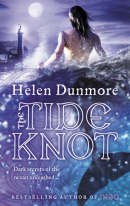
The Tide Knot - Helen Dunmore


Here's some good news for those of you who, like me, are fans of Helen Dunmore's glorious book Ingo, which I reviewed here; the sequel The Tide Knot is now out in the UK.

Here's a synopsis from Amazon:


"There's a current racing ahead, the colour of the darkest blue velvet. We plunge forward. The current is so strong that it crushes me. I'm jolting, juddering, struggling in its grip, but I can't break away. It's got me, like a cat with a bird in its claws." Sapphy, Conor and their mum have moved away from the cottage by the cove - away from the memories of their father, who disappeared two years ago - to the nearby town of St Pirans. Ever since, Sapphy has felt withdrawn and restless; she can't adjust to her new home and new life, and can't suppress the memories of her father and his mysterious disappearance. Unhappy in the world of Air, Sapphy finds herself increasingly drawn to the underwater world of Ingo and to her Mer friend, Faro. There she makes new friends: Faro's powerful, wise teacher, Saldowr, the dolphins, a whale and even sharks. But Ingo is becoming a more dangerous place. Although Conor senses this and pleads with Sapphy to stay away from Ingo, he cannot get through to her. And as Ingo grows in power both Sapphy and Conor are called to its depths to take on the might of Ingo's tides!

Minutes after I spotted this in the bookstore, I raced into the library (well, OK, I hurried !!) and asked if they had it yet. I was told it was on order and there were no reservations for it, so I promptly reserved a copy for myself. In the meantime, I will have to buy the paperback of Ingo (now it's out), so that I can read them back to back.

* * * * * *

The observant amongst you will have noticed that I've added a quote from Henry Miller to the sidebar (over there, under my Profile -->); it sums up perfectly my experience of books both here on my Blog and elsewhere across the Net and in real life, so I decided to add it to my Blog as a sort of manifesto. I hope you like it.

Friday, May 12, 2006

Poetry Friday 4

In honour of it being the birthday of the master of nonsense poetry, Edward Lear, today, I want to share with you one of my favourite poems of his:

The Jumblies

I

They went to sea in a Sieve, they did,
In a Sieve they went to sea:
In spite of all their friends could say,
On a winter's morn, on a stormy day,
In a Sieve they went to sea!
And when the Sieve turned round and round,
And every one cried, 'You'll all be drowned!'
They called aloud, 'Our Sieve ain't big,
But we don't care a button! we don't care a fig!
In a Sieve we'll go to sea!'
Far and few, far and few,
Are the lands where the Jumblies live;
Their heads are green, and their hands are blue,
And they went to sea in a Sieve.

II

They sailed away in a Sieve, they did,
In a Sieve they sailed so fast,
With only a beautiful pea-green veil
Tied with a riband by way of a sail,
To a small tobacco-pipe mast;
And every one said, who saw them go,
'O won't they be soon upset, you know!
For the sky is dark, and the voyage is long,
And happen what may, it's extremely wrong
In a Sieve to sail so fast!'
Far and few, far and few,
Are the lands where the Jumblies live;
Their heads are green, and their hands are blue,
And they went to sea in a Sieve.

III

The water it soon came in, it did,
The water it soon came in;
So to keep them dry, they wrapped their feet
In a pinky paper all folded neat,
And they fastened it down with a pin.
And they passed the night in a crockery-jar,
And each of them said, 'How wise we are!
Though the sky be dark, and the voyage be long,
Yet we never can think we were rash or wrong,
While round in our Sieve we spin!'
Far and few, far and few,
Are the lands where the Jumblies live;
Their heads are green, and their hands are blue,
And they went to sea in a Sieve.

IV

And all night long they sailed away;
And when the sun went down,
They whistled and warbled a moony song
To the echoing sound of a coppery gong,
In the shade of the mountains brown.
'O Timballo! How happy we are,
When we live in a Sieve and a crockery-jar,
And all night long in the moonlight pale,
We sail away with a pea-green sail,
In the shade of the mountains brown!'
Far and few, far and few,
Are the lands where the Jumblies live;
Their heads are green, and their hands are blue,
And they went to sea in a Sieve.

V

They sailed to the Western Sea, they did,
To a land all covered with trees,
And they bought an Owl, and a useful Cart,
And a pound of Rice, and a Cranberry Tart,
And a hive of silvery Bees.
And they bought a Pig, and some green Jack-daws,
And a lovely Monkey with lollipop paws,
And forty bottles of Ring-Bo-Ree,
And no end of Stilton Cheese.
Far and few, far and few,
Are the lands where the Jumblies live;
Their heads are green, and their hands are blue,
And they went to sea in a Sieve.

VI

And in twenty years they all came back,
In twenty years or more,
And every one said, 'How tall they've grown!
For they've been to the Lakes, and the Torrible Zone,
And the hills of the Chankly Bore!'
And they drank their health, and gave them a feast
Of dumplings made of beautiful yeast;
And every one said, 'If we only live,
We too will go to sea in a Sieve,---
To the hills of the Chankly Bore!'
Far and few, far and few,
Are the lands where the Jumblies live;
Their heads are green, and their hands are blue,
And they went to sea in a Sieve.


I will send you to read my absolute favourite of Lear's poems elsewhere because Marco Graziosi offers an illustrated version of The Owl and the Pussycat. Do take time to explore his site, it's fabulous, and do enjoy Mr Lear's nonsense - it's good for the soul !

Thursday, May 11, 2006

Maximum Ride: School's Out Forever - James Patterson

The sequel to James Patterson's Maximum Ride: The Angel Experiment is Maximum Ride: School's Out - Forever. Max and her flock fly south from New York in the hope of finding their parents, having rescued Angel from the School in California and recovered some secret documents about their origins. But after a fight at the vicious claws of the Erasers, they're forced to take Fang to a hospital for treatment, and the FBI turn up. The most senior FBI agent, Anne, takes them to her home to rest and for Fang to recover from his surgery, and then they are forced to face an even worse nightmare: going to a regular school. For Max there's no such thing as an ordinary day when her "homework" includes decoding encrypted computer printouts, figuring out when and how she's supposed to save the world, and then learning to face what may her greatest enemy: herself: a clone called Max II.

As with Maximum Ride: The Angel Experiment, the story is fast-paced and even frenetic at times, but the characters are still only roughly sketched in. These books would be perfect reading for the beach or the airport, when you want something light and easy to read. I assume there will be a third book at some stage since Max and the flock's fates are not yet resolved.

Wednesday, May 10, 2006

Maximum Ride: The Angel Experiment - James Patterson

I'm not a fan of James Patterson's fiction for adults, but I was offered the opportunity to read and review his YA novel Maximum Ride: The Angel Experiment (and its sequel Maximum Ride: School's Out - Forever). I established that they were thrillers with a Science Fiction element and agreed to give them a try. The eponymous Maximum Ride is a 14 year old girl, and she and her five adopted family members are mutants. They have 98% human DNA and 2% avian DNA: which means they have wings and can fly, they have raptor-like vision, are far stronger, have far greater stamina and far bigger appetites than normal humans. The six children (Max, Fang and Iggy - also 14, Nudge - 11, Gazzy - 8, and Angel - 6) were created as experimental recombinants in a lab called the School. Jeb, a sympathetic scientist, helped them to escape and looked after them for two years, before disappearing two years before the story starts, and since then they've been living on their own. They find themselves on the run from part-human, part-wolf predators called Erasers, who used to work at the School. The Erasers have orders to kill them so that the world will never find out that they exist, and to this end Ari (the son of Jeb and a childhood friend of Max's) tracks them down, kidnaps Angel, and transports her back to the School so that "the whitecoats" can do experiments on her again. The youngsters are forced to use their special talents to rescue her whilst attempting to learn about their pasts, and their destinies.

This book is fast-paced, with lots of short chapters to speed the reader on a ride of their own. The characterisation is limited, taking second place to the plot, but it will doubtless appeal to teenager fans of thrillers and the X-Men. I didn't find it as well written as Anthony Horowitz's "Alex Rider" books, but it's an enjoyable quick read.

Tuesday, May 09, 2006

Timon's Tide - Charles Butler

Timon's Tide is Charles Butler's second novel. It focuses on 16 year old Daniel, whose elder brother Timon, was drowned six years ago. His body was found near the Bristol docks, bound with plastic cords. Or so Daniel has always believed. Yet Daniel does not doubt that the down-and-out who accosts him in the street is Timon. Daniel already finds his complicated family life, with a step-father and a step-sister, difficult enough, without the unnerving presence of Timon, and the guilt Daniel feels over his brother's death, which he is now uncertain took place.

As with all Charles Butler's novels, Timon's Tide is chilling yet gripping; the pace is swift and the conclusion looks terrifyingly likely to be another tragedy for a family that is being haunted mercilessly.

Monday, May 08, 2006

Calypso Dreaming - Charles Butler

Charles Butler's Calypso Dreaming is set on Sweetholm, a small island out in the Bristol channel, which is best known for its seal and seabird colonies. When Geoff and Hilary Robinson are offered the opportunity to look after a house there for the summer, they see it as a good opportunity to work at patching up their disintegrating marriage. Tansy, their teenage daughter sees it as a chance to put behind her the unnerving experiments she and her best friend Kate have been making in magic. Unfortunately trouble is not so easily outrun and Sweetholm is far from the idyllic retreat it appears to be. It is, as the tagline on the dustjacket says, "one of the places where the world is frayed", a place where the dividing line between ordinary life and ancient magic has become dangerously thin. The key to the troubling events on Sweetholm is Calypso, a strange child with round lidless eyes and webbed feet hint at her ancestry. Her prophetic dreams have power, but will anybody dare to believe the truth ?

As with all of Charles Butler's books that I have read, the supernatural in this book is disturbing and unnerving; it seems all too easily possible. The book is also gripping and a page turner. Some of the things that happen to the characters, such as Calypso's uncle Dominic and Tansy's dad Geoff are frightening (more over the Scholar's Blog Spoiler Zone, but for all that, I couldn't put it down. If you have an impressionable nature, this book is best read in broad daylight !

Sunday, May 07, 2006

The Wolves of Willoughby Chase - Joan Aiken

I happened to spot Joan Aiken's The Wolves of Willoughby Chase in the library recently and since I'd never read it, yet had heard it mentioned quite often in children's literature circles, I borrowed it.

Bonnie Green lives in the lap of luxury in the manor house of Willoughby Chase in the northern English countryside. She has all the clothes, toys, and ponies that any child could want, and indulgent parents who encourage her to try things out. There is much love in the house, both from her parents and the dedicated household workers. When Bonnie's mother, Lady Sophia, becomes ill, her parents decide to take a sea voyage in the hope of restoring her health. With this in mind, Sir Willoughby asks his solicitor, Mr. Gripe, to find a governess to look after Bonnie in their absence. Mr Gripe recommends a fourth cousin once removed, a Miss Slighcarp, who arrives the night before her parents leave. To keep Bonnie company, Sir Willoughby has invited her orphaned cousin Sylvia to stay. Both of them will be taught by Miss Slighcarp, who will also run the estate. Sylvia has been living with Sir Willoughby's elderly sister, Aunt Jane, and they have barely been making ends meet; when Aunt Jane makes new clothes for Sylvia before she goes away, she uses their curtains.

Sylvia has to make a terrible journey to Willoughby Chase by train. It is very cold, and wolves attack the train; one of them breaks the window and gets into the compartment. Fortunately, a fellow passenger, Mr. Grimshaw, subdues and kills the wolf before it can do any damage. He loans Sylvia a travelling rug to help keep her warm, but later he is injured when a suitcase he is lifting down from the rack, hits him on the head. Bonnie insists that they take him to Willoughby Chase to see a doctor. Once Bonnie's parents leave, strange things start to happen; most of the servants are dismissed. Mr. Grimshaw and Miss Slighcarp are seen looking through Sir Willoughby's papers and burning some of them. When Miss Slighcarp starts wearing Lady Sophia's best gowns, Bonnie complains and is locked in a schoolroom cupboard with only bread and water to sustain her. Worse treatment soon follows, along with the news that Bonnie's parents are dead. The two girls soon find themselves fighting for survival in harsh circumstances.

This was an interesting book. How is it, though, that as often as this book has been mentioned, no one ever thought to mention it was the first in a series of THIRTEEN books ?! In case you didn't know that either and are wondering what the other twelve are, here's the full list of titles:

1. The Wolves of Willoughby Chase (1962)
2. Black Hearts in Battersea (1964)
3. Nightbirds on Nantucket (1966)
4. The Whispering Mountain (1968)
5. The Cuckoo Tree (1971)
6. Midnight Is a Place (1974)
7. The Stolen Lake (1981)
8. Dido and Pa (1986)
9. Is (1992) aka Is Underground
10. Cold Shoulder Road (1995)
11. Limbo Lodge (1999)
12. Midwinter Nightingale (2003)
13. The Witch of Clatteringshaws (2005)

I have been told that the series is only a "loose series" since the main character doesn't appear until the second book (so how does that work ?), but that was scant reassurance.

Saturday, May 06, 2006

Shakespeare's Secret - Elise Broach

I first found out about Elise Broach's Shakespeare's Secret from Camille's review at Bookmoot last September, and although it's not a fantasy novel (it's a mystery novel with a historical element), I was too intrigued not to want to read it. However, I've had to wait since September for the UK publication and then for the library to get a copy before I could get my hands on it. It finally arrived this week and I raced through it in a few hours as I was so hooked ! This is a well researched story about a missing diamond and a centuries-old puzzle: who was Willliam Shakespeare ? Was he really the man from Stratford or was that just a pseudonym for the Earl of Oxford ? The book's protagonist is a girl named Hero who always gets teased about her weird Shakespearean name every time she and her family move to a new town and she starts a new school. Not that being used to the teasing makes it any more bearable. When her next-door neighbour, a divorced older woman, tells her about the missing diamond that's believed to be hidden in her new house, Hero knows she has to find it. But why is Danny, who's the most popular boy in her sister Beatrice's year, so keen to help her ? And just how is the diamond connected to Shakespeare ? Hero is determined to find out all the answers. I highly recommend this book to everyone who likes mystery novels, history and/or Shakespeare.

Friday, May 05, 2006

Poetry Friday 3

Continuing the Spring poetry theme, I do like this poem by A E Housman.

Loveliest of Trees, the Cherry Now

Loveliest of trees, the cherry now
Is hung with bloom along the bough,
And stands about the woodland ride
Wearing white for Eastertide.

Now, of my threescore years and ten,
Twenty will not come again,
And take from seventy springs a score,
It only leaves me fifty more.

And since to look at things in bloom
Fifty springs are little room,
About the woodlands I will go
To see the cherry hung with snow.


* * * * * *

On the topic of children's books, The Guardian reports that

a clash of titans in one section of the world's leading children's book prizes was offset yesterday by an invasion of relatively ungarlanded talent in the other.

Four out of five names in the shortlist for the Carnegie medal have won the award before. But none of the eight finalists for the £5,000 Kate Greenaway illustrators medal have held it previously.

The awards - uniquely, administered and judged by librarians - are more internationally respected than any others for the age group. The Carnegie, which was founded 69 years ago and carries no prize money, has been won in the past by authors ranging from Eleanor Farjeon to Noel Streatfield and C S Lewis.

Apparently The Guardian's John Ezard doesn't know that whilst Eleanor Farjeon's name is pronounced "Farjohn", it's not actually spelt that way, but then, this is the paper that was so famous for its typos that it's still referred to by many people as The Grauniad ! However that's another matter. The full details about the two awards shortlists are in the report linked above.

Thursday, May 04, 2006

Howl's Moving Castle the movie (Spoliers)

I finally got hold of a copy of Miyazaki's Howl's Moving Castle yesterday. My initial reaction was "Wow!" because it's a beautiful animation, bright and bold, and very fantastic in looks. But I confess, I spent much of the two hours of its running time picking my jaw up off the floor because its plot is radically different from the plot of Diana Wynne Jones' book, Howl's Moving Castle. The Miyazaki film is clearly not an adaptation so much as an interpretation with Miyazaki themes including airships, cute non-human sidekicks and redemption (I've been reading up on Miyazaki !). The focus of the film is still on Sophie and her adventure whilst cursed with old age, but the main action of the plot takes place during a war, that is reminiscent of World War One and is located in a fantastical nation. Whilst the novel concentrates on Howl's womanizing and his attempts to weasel out of locating a missing prince and a missing wizard, the film depicts Howl avoiding requests to help out in the war for pacifist reasons, and deals with the consequences of his decision.

Many of the book's characters are also modified in the film. Howl's apprentice, Michael Fisher, is a teenager in the book but a young boy called Markl in the film. Sophie has just one sister in the film instead of the two in the book. Astonishingly the Witch of the Waste, is a huge heavyset woman who later becomes an old crone, instead of looking young and beautiful, and rather than terrorising the other characters as a frightening villain, she is treated as a grandmother character and even taken into Howl's home. Calcifer, who appears to be a scary fire demon in the book, becomes an adorable little flame in the film. Also, in the film Howl has the ability to turn into a large, powerful bird. Finally, whilst there is a "Wizard Suliman" in the book, in the film this character become a female sorceror, "Madame Suliman", who bullies people.

Having said all this, the film is very good; it's very watchable and quite gorgeous, but very confusing to watch if you're familiar with the book !

Tuesday, May 02, 2006

Death of a Ghost - Charles Butler

Charles Butler's new novel Death of a Ghost is a timeslip ghost story from the author of The Fetch of Mardy Watt (which I read last August)
and Calypso Dreaming (which I've yet to read). When 16 year old Ossian returns to Lychfont House from America with his artist father, he finds things are both familiar and yet oddly different. He reacquaints himself with the Frazer family, who live at Lychfont, and finds himself questioning the accuracy of certain of his childhood memories and wondering just why the place seems to hold such power over him. Of one thing he is sure, however: the ghosts are still haunting him. Whilst Ossian is puzzling over his existence, a Celtic goddess is searching for her lost love. Sulis calls in the scryer to track down her lover, wherever he may be, for their wedding must go ahead. After all, she and Ossian were made for each other! But which Ossian is which ? There's the 15th century apprentice to a goldsmith/alchemist who has a sideline in torture for the government of the day; there's the Iron Age son of a priest of Sulis; and then there's the 21st century son of an artist. But for whom of these three is Sulis searching ?

This is a supernatural thriller that grabs the attention from the first page and refuses to let go. The twist in the tale is quite astonishing and chilling. I won't say more or I'll spoil it !

Monday, May 01, 2006

ABC Meme

I cheekily stole this one from Mrs Coulter at The Republic of Heaven. Feel free to play or not...

Accent: I retain the Gloucestershire accent of my childhood and youth.

Booze: Haven't had an alcoholic drink for 6 years now (and I've never been much of a drinker anyway), but I do like Southern Comfort and Coke.

Chore I Hate: Cleaning - dusting or hoovering...

Dog or Cat: Cat - my cat is gorgeous (and a grandchild substitute to my parents!)

Essential Electronics: PC - I have a lot of "virtual" friends (and some real ones I've met via the Net) so I wouldn't be without mine.

Favourite Perfume: Can't abide it! I especially dislike it when someone smells as if they've tipped half a bottle over themselves. *Ugh* !

Gold or Silver: Silver always.

Hometown: I've got two - Oxford and Stroud (the nearest town to the village where I grew up - see accent.)

Insomnia: I am currently suffering my typical British Summer Time issue of waking up far too early. I'm an early riser anyway, but waking at 4.30 am or before is insane and unpleasant !

Job Title: Hmm. Paying job: editor (for a non-publishing firm); non paying job: Writer The latter's on my contact cards.

Kids: None !

Living arrangements: There's just me in this tiny attic !

Most admirable traits: intelligent, very observant, empathic

Number of sexual partners: None thanks. (I prefer to channel all my energies into my writing !)

Overnight hospital stays: Two too many for my liking ! Tonsillectomy when I was in my 20s; op. to fix a recurrent dislocating shoulder (also in my 20s)

Phobias: Heights - although I'm a lot better about them than I was as a child ! Also fire - again, I'm better than I was - I'm not too scared to light candles these days !

Quote: One of my current favourites is: "If a nation loses its storytellers, it loses its childhood." - Peter Handke

Religion: None. I had a period of intense religiosity from 16 - 22 but it didn't survive my student days in Oxford.

Siblings: Two - one of each, both younger.

Time I wake up: Normally 4.50 am (currently any time after 4 am !)

Unusual talent or skill: I automatically proof-read anything I read.

Vegetable I love: The humble pea ! (Also brocolli, carrots, potatoes)

Worst habit: A tendency to expect the worst.

X-rays: Too many - on the recurrent dislocating shoulder, on teeth, on knees...

Yummy foods I make: If we're talking cooking from scratch, I don't !

Zodiac sign: Scorpio - You have to watch out for the sting in the tail (allegedly !)

Sunday, April 30, 2006

"The Keys to the Kingdom" considered

If you've not read the first four books of Garth Nix's "Keys to Kingdom" series, you may want to avoid the rest of this post, but don't stop reading just yet ! In keeping with the recent spring theme of my Blog, I wanted to mention the music I've been listening to this weekend, when the radio has been off. Despite the lack of spring weather since Friday, I've been trying to keep the "Spring is here" mood going by listening to "Sheep May Safely Graze" - Bach, Symphony No. 6 (The Pastoral) - Beethoven, "The Walk to the Paradise Garden" - Delius, "Concierto de Aranjuez" - Rodrigo (known to all fans of the film Brassed Off as 'The Orange Juice Concerto', and often referred to by me as "aural sunshine"). Sadly it's having no effect on the weather, which persists in being dull, cloudy and cool (for the time of year) ! But if nothing else, I'm enjoying some lovely music !

* * * * * *

I seem to keep coming back to this series in my Blog. I've already posted a review of Sir Thursday this month, and I've already discussed the issue of Arthur Penhaligon not choosing his destiny, and his desire to refuse his destiny, but I make no apology for coming back to this, because I find it interesting and I hope others do too. The more I read of Nix's series, the more do I long to write a paper comparing and contrasting the hero, Arthur Penhaligon, with Harry Potter - and believe me, as soon as the two series are finally completed, I'll do just that ! I've just re-read the entire series-so-far because I found I'd forgotten too many of the little details of the first three books when I first read Sir Thursday three weeks ago. What I keep coming back to is Arthur's continuing resistance to his role as the Rightful Heir of the Architect. He doesn't want this responsibility and he keeps trying to return home. This is in stark contrast to Harry Potter, who couldn't wait to get away from the Dursleys. Of course, Harry was miserable whilst living full time with the Dursleys after his parents were killed, whereas Arthur is quite happy with his adopted family, having also lost his birth parents at a very young age to a very virulent flu epidemic. When Mister Monday is tricked by the first part of the Will of the Architect into choosing Arthur as the Rightful Heir, Arthur finds himself thrust into a situation where he seems to have little choice except to do what's necessary to overcome Mister Monday, and once he does, he is quite explicit that he wants to return to his own Secondary Realm until he's grown up and willing to take on the duties of being the Heir. Unfortunately, his defeat of Mister Monday attracts the attention of the other six Morrow Days (the Trustees of the Will) and he finds he has to keep going back to the House to fight them, to take their Keys from them and release further parts of the Will. But each time he does this, he is forced to use the Keys and doing so makes him a little less human and a little more of a Denizen of the House. By the end of the events of Sir Thursday, he is half human and half Denizen, and he's told that once he's 60% Denizen, he will not be able to reverse the process of becoming a Denizen (until then the changes will wear off provided Arthur refrains from using the Keys for a century). What is interesting, is that in Sir Thursday the Piper, one of the adopted sons of the Architect and the Old One, tries to claim that he is the Rightful Heir and take over Arthur's role. If the Piper did become the Rightful Heir, Arthur would be able to return home permanently. The Piper offers to take from him the four Keys which Arthur has so far acquired - but Arthur refuses to relinquish his role as the Heir. Why ? Well, the Piper refuses to agree to Arthur's terms; he refuses to promise that there will be no more interference with the Secondary Realms, including Earth, if he becomes the Heir. So here Arthur is - he's got the chance to forget about the House, the Will of the Architect and being the Rightful Heir, but he refuses the opportunity, because by now he knows that the Architect's policy of non-interference has been disregarded (including by the Architect herself) and that there can be no peace for his world if that policy continues to be disregarded. It appears that he must do what is necessary, even if that does mean he will eventually be unable to go back to his loving family. I, for one, am curious to see how the series will continue through the next three books.

Saturday, April 29, 2006

Epic Heroes and Tales

Philip Pullman, writing for The Times this week, discussed the first action heroes - the heroes of the ancient epics. Pullman notes that epics are big because they

are about big things — death, courage, honour, war, shame, vengeance. [...] large and public matters — the fate of a nation, the return of a king, the success of an army, the origin of a people. [Therefore the] principal characters are larger than human beings, and perhaps simpler too: they are heroes.

Fantasy authors are fond of epic tales: Pullman's own "His Dark Materials" trilogy is described as an epic by many reviewers. Probably the most famous modern fantay epic is Tolkien's The Lord of the Rings, which is a physically big book as well as about the big themes of war, courage, death, honour, the return of a king and the fate of several nations. The other characteristic of epics is that they are tragic; as Pullman observes The epic is not a place where anyone lives happily ever after; it obeys a mightier realism than that. And this is certainly true of both "His Dark Materials" and The Lord of The Rings; Lyra and Will save the multiverse from destruction and ensure the continuation of humanity's intelligence, but they cannot be together. And who can help wondering if either one of the will ever be truly happy, no matter how hard they work to achieve the Republic of Heaven on Earth, without the love of the other ? Similiarly, Frodo saves the Shire by ensuring the destruction of the Ring (even if he couldn't cast it into the Fire at the end), yet he cannot settle down, like Sam, and be happy with a wife and children, or even as an uncle to Sam's children. Instead he must leave his beloved Shire and seek healing in the West, before he can return to Middle-earth to die. Sam is more fortunate than Frodo, he remains in the Shire with his wife and children, yet he too must pass into the West, though he bore the Ring but a short time.

We might speculate then, whether the Harry Potter series as a whole can be described as an epic, if Harry himself does survive to live happily ever after. I'm not sure the characters can be described as larger-than-life, but the series has got epic themes: war, death, courage, vengeance (Harry's desire for revenge against Voldemort for the deaths of his parents, against Bellatrix for the death of Sirius, and against Snape for the death of Dumbledore), and honour all feature largely. But Harry is not really a larger-than-life hero: indeed, my first paper about Harry Potter suggested that Harry is more of an Everyman, a fairly ordinary boy to whom extraordinary things happen. He's talented at Quidditch (and flying in general), and he's very good at Defence Against the Dark Arts, but he's not a very dedicated student (if it hadn't been for Hermione, he wouldn't have passed his first year exams, let alone his OWLS). And whilst he's both brave and loyal, he still has a tendency towards impulsive and reckless actions that is dangerous (even if it was only directed at Malfoy and Snape in HBP). I have yet to be convinced that the Harry Potter series is epic, but maybe J K Rowling will overcome my doubts in the final book.

* * * * * *

Going back to the theme of yesterday's poetry post. I'd forgotten Coleridge's "Work Without Hope" until I was reminded of it today whilst watching Groundhog Day (a favourite film of mine) in which Phil (Murray's character) is heard quoting the third and fourth lines:

All Nature seems at work. Slugs leave their lair -
The bees are stirring - birds are on the wing -
And Winter slumbering in the open air,
Wears on his smiling face a dream of Spring!
And I the while, the sole unbusy thing,
Nor honey make, nor pair, nor build, nor sing.

Yet well I ken the banks where amaranths blow,
Have traced the fount whence streams of nectar flow.
Bloom, O ye amaranths! bloom for whom ye may,
For me ye bloom not! Glide, rich streams, away!
With lips unbrightened, wreathless brow, I stroll:
And would you learn the spells that drowse my soul?
Work without Hope draws nectar in a sieve,
And Hope without an object cannot live.

Friday, April 28, 2006

Poetry Friday 2

It's time for another Poetry Friday. This time I've gone for the Spring theme as it's actually been sunny and fairly warm in Oxford this afternoon.

But These Things Also

But these things also are Spring's --
On banks by the roadside the grass
Long-dead that is greyer now
Than all the Winter it was;

The shell of a little snail bleached
In the grass; chip of flint, and mite
Of chalk; and the small bird's dung
In splashes of purest white:

All the white things a man mistakes
For earliest violets
Who seeks through Winter's ruins
Something to pay Winter's debts,

While the North blows, and starling flocks
By chattering on and on
Keep their spirits up in the mist,
And Spring's here, Winter's not gone.


Edward Thomas

This was the first of Thomas' poems I ever read, so it has a particularly strong resonance for me.

Spring

Sound the Flute!
Now it's mute.
Birds delight
Day and Night
Nightingale
In the dale
Lark in Sky
Merrily
Merrily Merrily to welcome in the Year

Little Boy
Full of joy,
Little Girl
Sweet and small,
Cock does crow
So do you.
Merry voice
Infant noise
Merrily Merrily to welcome in the Year

Little Lamb
Here I am.
Come and lick
My white neck.
Let me pull
Your soft Wool.
Let me kiss
Your soft face
Merrily Merrily we welcome in the Year


William Blake, Songs of Innocence

Blake's Songs of Innocence and Experience were required reading for my English degree, and the contrast between the Innocent poems and the Experienced ones is quite often startling.

Finally, I have to echo the opening of T S Eliot's The Wasteland: April is the cruellest month ! We've had some quite bad weather this April in the UK, so having the sunshine today was a real blessing - and it's the start of the May Day Bank Holiday weekend (which is another blessing !)

Thursday, April 27, 2006

Emil and the Detectives - Erich Kastner

I borrowed Erich Kastner's Emil and the Detectives from the library after it was mentioned by Guus Kuijer in The Book of Everything. When an author is as emphatic about another author's book as Kuijer is, I presume that reading it is relevant to the story in which it is mentioned.

Emil is going to Berlin to visit his grandmother and his maternal aunt. He sets out on the train from the little village where he lives, but on the way he falls asleep and as he sleeps, the money which his hardworking hairdresser mother has given him to give to his grandmother is stolen. Emil considers reporting the matter to the police, but the fact that he recently vandalised a public statue (he chalked a moustache and red nose on it) puts him off. Instead he follows the man off the train into Berlin, then enlists the aid of a boy named Gustav and his gang of friends (the detectives of the title). Together they chase, capture, and unmask the thief, who tries to bluff his way out of the situation. The boys plan well, using their wits effectively to devise a very simple yet practical way to effect the thief's capture. The suspense in this story is well written and the outcome of the thief's capture is very satisfying. Even though this book was published in 1929, it has held up well and is thoroughly enjoyable.

* * * * * *

The lack of reviews this week is the result of a combination of too little time to write intelligible reviews as I've been working on my wizards writing project quite a lot.

Tuesday, April 25, 2006

The Mouse and His Child - Russell Hoban

I cannot recall, now, where I saw a reference to Russell Hoban's The Mouse and His Child a few weeks ago that prompted me to go hunting for it at the library. It's the story of two clockwork mice, a father and son, who dance together. When the key in the father's back is wound up, he dances in a circle, swinging his son up and down in the air. They begin life in a warm toy shop at Christmas, in the company of other clockwork toys. The mouse child longs for the aristocratic lady elephant to be his mother, the seal who balances a ball on her nose to be his sister, and for them all to live in the elegant dolls house on the shop counter. But they are sold to a family, in which the parents refuse to allow the children to play with the toys; instead they are only brought out at Christmas. One night, a few years after they are sold, the mouse child is overcome with longing for the elephant, the seal and the dolls house, and he begins to cry, breaking the most important rule of clockwork. The family cat is startled by the noise and knocks a vase over onto the toy mice, breaking them. They are thrown out with the rubbish, but this is just the start of their quest for a family and a home. A passing tramp finds them, repairs them to the extent that they can walk (but no longer dance), and sets them on their way with the injunction: "Be tramps". Unfortunately they then run into Manny Rat, a tyrannical crook, who uses clockwork toys as slave labour and doesn't hesitate to smash those who get out of line. The mice escape him with the intervention of a fortune-telling frog, who frightens Manny Rat with a terrible prophecy that links the fates of the mice to the rat: "A dog shall rise; a rat shall fall." What follows is a series of encounters in which the mice, particularly the child, develop a personal philosophy, that eventually leads them to achieve the mouse child's dream.

This book is quite gruesome in places - with a number of violent acts being perpetrated against the various characters. I did wonder, as I was reading it, just what child readers make of the combination of philosophy and violence.

Sunday, April 23, 2006

For Librarians and Book Lovers Everywhere

I didn't see it myself, but last night's Doctor Who episode ("Tooth and Claw" written by Russell T Davies) contained the following gem of dialogue which both my siblings were keen to share with me, and that I just had to share with those who are librarians or (like me) ardent book lovers !

The Doctor: "You want weapons? We're in a library. Books! Best weapons in the world."
[puts glasses on]
The Doctor: "This room is the greatest arsenal we could have."
Grabs a heavy book and tosses it to Rose.
The Doctor: "Arm yourself."


This is so apt - if only people would use books to arm themselves against ignorance and prejudice, instead of reacting with prejudice and ignorance to ban books !

Saturday, April 22, 2006

Book to Film Adaptations

Here are a couple of news items that have appeared in The Guardian this week.

Following on from my piece about the short story in Britain (back in January), The Guardian now reports that the short story is undergoing a revitalisation in Britain, and the success of the Asham Award, which has celebrated its 10th anniversary this week, is just one reflection of this revival. The award was launched to promote new women writers, and the winning stories will be published in an anthology alongside stories specially commissioned from established writers.

* * * * * *

Meanwhile The Guardian, in conjunction with Borders and Waterstones, has revealed a list of the top 50 film-book adaptations. A panel of experts has drawn up the list, which will be voted on by the public; the bookshops will promote the books in shops. Jane Austen is included once, for Pride and Prejudice oddly, rather than Emma Thompson's Oscar-winning adaptation of Sense and Sensibility directed by Ang Lee. And whilst I personally would agree that most of the film versions of J K Rowling's Harry Potter books are poor, I'm surprised that Peter Jackson's epic adaptations of The Lord of the Rings are missing, as are E M Forster's Howards End and A Room With a View. Children's literature is represented by Alice in Wonderland, Charlie and the Chocolate Factory, The Jungle Book, A Kestrel for a Knave (aka Kes), The Railway Children and Watership Down, although there is no indication which version of any of the 50 listed films is meant when more than one version has been made. Given the rather odd nature of The Guardian's list, I wondered which film-book adaptations you favour ? I'm not asking for 50 - a shortlist of 5 will suffice, but if anyone wants to offer a longer list, feel free. I'll compile a Scholar's Blog list collated from your suggestions at a later stage.

Thursday, April 20, 2006

The Book of Everything - Guus Kuijer

The Book of Everything by Guus Kuijer is a brief yet intensely moving book about a nine year old boy named Thomas whose strictly religious father rules their house with his fists and a wooden spoon (with which he beats Thomas), and who insists that the family live according to the Bible. But Thomas finds an escape route from his misery - he sees incredible things that no one else notices such as the tropical fish which swim in the canal, and the frogs that fill the street and try to climb through the letterbox. Thomas starts to record all his observations in a notebook, which he calls "The Book of Everything". In it he also records his dearest ambition: to be happy. But he is not sure it will ever be possible with his father around. One day, however, Thomas meets his neighbour Mrs Van Amersfoot, a widow whose husband was executed by the Nazis and who is consequently something of a rebellious spirit. She recognises a similar spirit Thomas and encourages him not to be frightened or to believe that he's all alone in his battle for happiness. She plays him Beethoven records and lends him books, including Emil and the Detectives. Thus Thomas discovers that in the fight against his father, his uniqueness, and in particular, the extraordinary power of his imagination, are the biggest weapons he possesses.

You can read the first two chapters of the story on the Arthur Levine website and I'm sure that once you do, you will want to read the rest of it too.

The Edge of the Forest - April issue

The April issue of The Edge of the Forest is up, thanks to the stirling efforts of Kelly of Big A, little a. There's an interview with Michael Buckley, the author of The Sisters Grimm series, by Kelly. Sheila Ruth, of Wands and Worlds rounds up Small Press Month. Since April is National Poetry Month, Kim Winters of Kat's Eye has A Day in the Life of children's writer and poet, Heidi Roemer. There are also book reviews galore by Susan of Chicken Spaghetti, Kelly, Jen Robinson of Jen Robinson's Book Page, Liz of A Chair, A Fireplace and a Tea Cozy, Little Willow of Slayground, Tangognat of Tangognat, and me ! Plus the usual round up of Blogs on YA books and Kids' Picks. Don't hesitate to pop over and wander around The Edge of the Forest !

Tuesday, April 18, 2006

The Assassin's Edge - Juliet E McKenna

Warning: Don't read this review if you don't want spoilers for the preceding four books in the series ! I've done my best to avoid spoiling the preceding books in the reviews so far, but if this review is to make any sense, I'm going to have to include spoilers to the previous four.

* * * * * *

The Assassin's Edge is the fifth and final book in Juliet E McKenna's series "The Tales of Einarinn".

After Livak has collected her fee from Archmage Planir for bringing a practitioner of Artifice back from the Mountains in The Gambler's Fortune, she meets up with Ryshad in Toremal. He has earned himself a princely sum after saving Messire D'Olbriot's life in an attack carried out against the D'Olbriot Name in The Warrior's Bond. He has also been released from his oath to Messire, as the latter has realised that Ryshad cannot continue to divide his loyalties between his oath to D'Olbriot and his friendship with Temar D'Alsennin. Livak suggests that the two of them move to the recovered colony of Kel Ar'Ayen so they can both be with their friends (Livak's friend Halice having remained there after the events at the end of The Swordsman's Oath). Livak and Ryshad are settling down to life in Kel Ar'Ayen, although Livak is feeling a little bored, there being few gambling prospects on this side of the ocean. Her boredom is quickly banished, however, when it becomes clear that the expected ships from Toremal that are bringing much needed goods and more potential colonists, have been hijacked by pirates. To make a bad situation even worse, the pirates are being led by three Elietimm enchanters. Still smarting from the loss of his son, Eresken, (in The Gambler's Fortune), Ilkehan is determined to regain control of Kel Ar'Ayen's riches, so that his people can move there from the barren rocky islands on which they live. Livak reluctantly volunteers to go up against Ilkehan again, accompanied by Ryshad and Shiv, and Sorgrad and 'Gren, the brothers who assisted her in her quest for Artifice in the Great Forest and the Mountains. They travel to the island of one of Olret, one of Ilkehan's rivals in order to gain his assistance in travelling to Ilkehan's home, with the promise that they will put an end to Ilkehan's raiding and revenge the maiming of Olret's son.

Whilst Livak and the others are away in the Ice Islands, trying to defeat Ilkehan, Halice and Temar lead the Kel Ar'Ayen colonists against the pirates by way of keeping Ilkehan's attention from his own domain. Despite having elemental mages, their own practitioner of Artifice, and a number of mercenaries to do battle with the pirates, Temar and Halice don't have things all their own way and one mage is badly injured and another is killed in the ensuing fight.

This book is an exciting and fitting finish to the "Tales of Einarinn" series; and my favourite book of the five.